
Cape Cod homes face a combination of coastal exposure, seasonal vacancy and delayed problem detection that ordinary residential cleaning standards were not designed to manage.
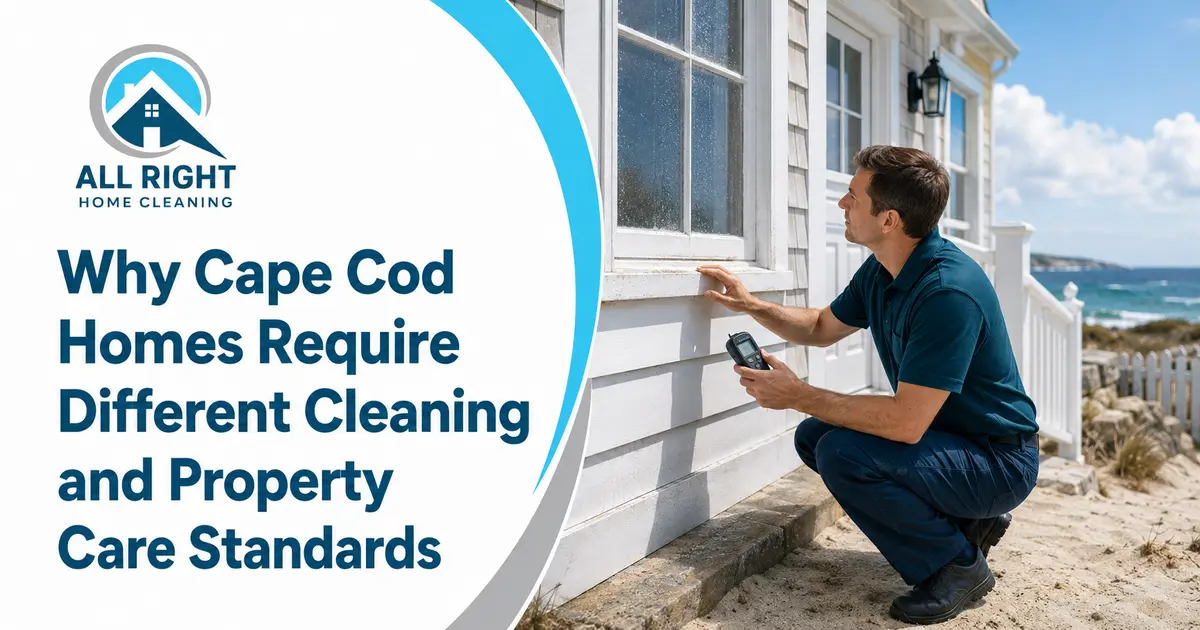
Cape Cod homes require different cleaning and property care standards because a coastal seasonal property experiences different conditions from a continuously occupied inland home. Moisture, airborne salt, sand, pollen, changing weather and long periods without daily observation can allow residue and visible concerns to develop in areas that routine cleaning rarely reaches.
The essential difference is not simply more cleaning. It is a broader standard that connects detailed cleaning, material appropriate methods, seasonal timing, visual observation, quality verification and clear communication with the owner.
A Deep Cleaning Service should remove accumulated soil from baseboards, cabinet surfaces, window tracks, vents, fixtures, floors, kitchens, bathrooms and other detailed areas according to the materials and condition of the property. Professional Cleaning Services should also explain what was cleaned, what was observed and what may require attention from another qualified professional.
Cleaning does not repair leaks, control indoor humidity, treat extensive mold, stop corrosion or replace a professional property inspection. For a second home owner, the correct standard is straightforward: clean what can be safely cleaned, verify the result, report visible concerns and prepare the home for arrival without pretending that cleaning alone provides complete property maintenance.
Why Can Cape Cod Homes Not Be Cleaned Like Ordinary Occupied Homes?
A primary residence receives constant human observation. Someone notices a musty smell, condensation on a window, sand near an entrance, dust on a vent or staining beneath a sink. Even when the homeowner does not act immediately, the condition is visible.
A vacation home, summer home or second residence may remain closed for weeks or months. During that period, the property loses its most basic monitoring system: a person living inside it.
The cleaning standard must therefore account for two separate variables:
- Environmental exposure, including moisture, salt, wind, sand, pollen and storm related residue.
- Time without observation, which determines how long dust, odors and visible warning signs can remain unnoticed.
A property does not require a higher standard simply because it is expensive or located near the ocean. It requires a different standard because its exposure pattern, occupancy cycle, building materials and absence period change what must be checked, cleaned and communicated.
What Does Moisture Change Inside a Seasonal Home?
Moisture changes the cleaning priority because it can affect odors, condensation, dust adhesion, bathroom surfaces, window areas and other places with limited air circulation. A home may appear generally clean while still feeling stale or musty after remaining closed.
The United States Environmental Protection Agency identifies moisture control as the central requirement for controlling indoor mold. Its residential guidance advises keeping relative humidity below 60 percent when possible, with an ideal range between 30 and 50 percent. It also explains that condensation on windows, walls or pipes can indicate a humidity or moisture concern. EPA guidance on mold and moisture
This distinction matters because cleaning can remove ordinary surface residue, but it cannot correct the source of excessive moisture. A responsible cleaning standard separates three different conditions:
- Removable soil, such as dust, ordinary bathroom residue and dirt on hard surfaces.
- A visible moisture warning, such as recurring condensation, water staining or damp material.
- A condition requiring qualified assessment, such as extensive mold, an active leak or damaged porous material.
After these conditions are separated, the homeowner receives useful information instead of a false impression that every problem was solved with a cleaning product.
How Do Salt and Sand Change Surface Care?
Salt and sand create different forms of surface stress. Sand acts as a fine abrasive when it is dragged across flooring. Salt residue can remain on glass, entry hardware, exterior facing surfaces and objects exposed to coastal air. Moisture can make fine residue adhere more firmly to surfaces.
Massachusetts climate resilience guidance states that ocean salts and coastal humidity can accelerate corrosion in untreated steel and other metals. This does not mean cleaning can prevent every form of coastal deterioration. It means a Cape Cod property should be cleaned with greater attention to surface compatibility and visible material changes. Massachusetts climate resilience guidance
Understanding why coastal homes accumulate more damage begins with separating residue from deterioration. A cloudy film may be removable. Discoloration, pitting, peeling finishes or recurring rust may indicate a material condition that cleaning alone cannot reverse.
The areas most likely to reveal coastal exposure include:
- Entrance floors where sand is tracked inside
- Door thresholds and sliding door tracks
- Window glass, sills and tracks
- Porch access points and mudroom surfaces
- Metal fixtures near doors and windows
- Floor edges where abrasive particles collect
- Corners that receive limited routine attention
These locations should not all receive the same chemical, brush or pressure. Hardwood, natural stone, painted wood, stainless steel, glass and coated metal respond differently. The professional standard is not aggressive scrubbing. It is choosing a method that removes residue without creating avoidable surface damage.
Why Does a Closed Home Require More Observation?
An empty home can remain visually undisturbed while conditions change around windows, plumbing fixtures, vents, cabinets and exterior access points. The absence of daily activity also means there is no one present to recognize a new odor, insect activity, water staining or unexpected debris.
A deeper visit should therefore combine cleaning with structured visual awareness. The team is not performing a technical home inspection unless specifically qualified to do so. It is observing the areas already being cleaned and communicating visible conditions that the owner may otherwise miss.
This distinction protects the owner from two common failures. The first is a cleaning service that ignores an obvious concern because it falls outside the checklist. The second is a service that makes an unsupported diagnosis about mold, plumbing, structural damage or indoor air quality.
Useful property communication describes what can actually be observed. For example, it can report a stain beneath a sink, condensation on a window or corrosion visible on a fixture. It should not claim to identify the hidden cause without appropriate expertise.
What Should a Deep Cleaning Service Address in Cape Cod?
A Deep Cleaning Service should address accumulated residue, detailed surfaces and neglected areas that routine maintenance does not consistently cover. In a Cape Cod home, the scope should also consider the property type, length of vacancy, recent weather exposure, planned arrival date and whether the home is used by owners, family members or vacation rental guests.
A reliable process normally follows five decisions:
- Understand the property context. Confirm how long the home has been empty, when it was last cleaned and how it will be used next.
- Identify materials and visible conditions. Separate ordinary dirt from staining, deterioration, moisture concerns and items that require another trade.
- Define the cleaning scope. Determine which rooms, fixtures, appliances and detailed surfaces require attention.
- Use an organized cleaning sequence. Work through the property in a consistent order so that dust, sand and residue are not transferred back onto completed areas.
- Verify and communicate. Review the completed work and report any visible condition that may affect home readiness.
This process produces more value than a generic promise of thorough cleaning. It gives an absent homeowner a clear relationship between the home’s condition, the work performed and the property’s readiness for the next arrival.
Where Does Deep Cleaning End and Property Care Begin?
The strongest Cape Cod standard respects these boundaries. Deep cleaning restores cleanliness and improves visibility. Property care helps the owner understand the condition of the home. Qualified specialists handle repairs, hazardous conditions and technical diagnoses. Combining these functions intelligently creates property readiness, while confusing them creates risk and false expectations.
Who Needs Different Cleaning and Property Care Standards in Cape Cod?
Not every Cape Cod property needs the same cleaning frequency or scope. The correct standard depends on occupancy, distance from the coast, length of vacancy, property use, surface materials, seasonal exposure and the owner’s ability to observe the home.
The strongest need usually exists among people who own a second home, vacation home, waterfront property, summer residence or seasonal rental and spend most of the year outside Cape Cod. These owners are not simply purchasing a cleaner home. They are purchasing property readiness, reliable communication and confidence that the residence will be prepared before they arrive.
What Changes for Second Home Owners Who Live Elsewhere?
A second home owner who lives in Boston, New York, Connecticut, Rhode Island or another location cannot inspect the property whenever conditions change. A storm, plumbing leak, pest issue, musty odor or unexpected accumulation of sand may remain unnoticed until the next visit.
For this owner, the cleaning standard must provide more than surface appearance. It should establish:
- A clearly defined scope before the visit
- Secure and responsible property access
- Attention to areas affected by long vacancy
- Consistent room by room execution
- Visual awareness while cleaning
- Verification before the team leaves
- Clear communication about visible concerns
This does not turn a cleaning company into a property inspector or property management company. It creates a disciplined communication process that reduces the information gap between the owner and the home.
A Deep Cleaning Service becomes especially valuable when the property has remained closed long enough for ordinary maintenance cleaning to become insufficient. The goal is to restore an appropriate baseline before seasonal use begins.
Do Year Round Residents Need the Same Standard?
Year round residents may also need a Cape Cod specific standard, but their reason is different. They are present to notice problems and clean active living areas, yet coastal residue, sand, moisture and seasonal pollen can still affect entrances, floors, windows, fixtures and exterior facing rooms.
The need for deep cleaning should therefore be based on the property’s condition rather than the owner’s mailing address. A year round home near a beach access point may collect more sand than a seasonal property farther inland. A home with several occupants, pets or frequent visitors may also require more detailed attention than a lightly used second residence.
The standard should change when routine cleaning no longer reaches the areas where residue has accumulated. Baseboards, window tracks, vent covers, ceiling fans, cabinet surfaces, floor edges and spaces beneath accessible furniture are typical examples.
What Changes for Vacation Rental Owners?
A vacation rental operates under a different use cycle. Guest turnover cleaning focuses on resetting the property between reservations. It usually prioritizes bathrooms, kitchens, floors, linens, trash, supplies and visible presentation.
Deep cleaning serves another purpose. It addresses accumulated detail that cannot always be completed within a short turnover window.
A vacation rental may require a deeper service when:
- Repeated turnovers have left limited time for detailed work
- Sand and soil have collected along floor edges and beneath furniture
- Kitchen residue has accumulated on cabinet fronts and appliance surfaces
- Bathroom buildup remains despite regular turnover cleaning
- The property is preparing for the beginning of the rental season
- The home is transitioning from rental use back to owner use
Turnover cleaning and deep cleaning should not be treated as interchangeable services. One restores the property for the next guest. The other restores the detailed cleaning baseline that repeated occupancy gradually erodes.
Which Property Profiles Require the Most Attention?
This comparison shows why a single generic checklist is weak. The same kitchen can require different work depending on whether the home was closed for three months, occupied by rental guests every week or recently affected by renovation dust.
When Does a Cape Cod Home Need a Deep Cleaning Service?
A Cape Cod home needs deep cleaning when its present condition exceeds what routine maintenance can reasonably correct. The decision should be based on accumulation, property use, vacancy duration, upcoming occupancy and recent work performed inside the home.
A calendar can help with planning, but it cannot determine the entire scope. Two homes closed for the same period may have very different conditions because of ventilation, proximity to the shore, building materials, previous cleaning quality and weather exposure.
Is Seasonal Opening the Most Important Time for Deep Cleaning?
Seasonal opening is one of the most valuable times to schedule a Deep Cleaning Service because the home must transition from vacancy to active use. The owner is not simply removing dust. The property must be made functional, comfortable and ready for family members or guests.
An opening service may address:
- Dust on horizontal and vertical surfaces
- Window sills and interior tracks
- Baseboards and floor edges
- Cabinet fronts and accessible interiors included in the scope
- Bathroom fixtures and visible buildup
- Kitchen surfaces and appliances included in the agreement
- Ceiling fans and accessible vent covers
- Sand, cobwebs and debris near entrances
- Floors throughout the home
Once these areas are cleaned, the result should be reviewed. The purpose of seasonal opening is not to create the appearance of readiness in photographs. It is to make the property genuinely usable when the owner arrives.
Should Deep Cleaning Be Scheduled Before or After a Long Vacancy?
Deep cleaning is generally most useful near the end of a long vacancy and before the next period of occupancy. Cleaning too early may allow dust, pollen, cobwebs or insects to reappear before the owner returns.
The ideal timing depends on:
- When the property will be occupied again
- Whether contractors or maintenance providers still need access
- Whether utilities and water systems are active
- Whether another inspection or repair must happen first
- Whether linens, groceries or other arrival services will follow
- Whether the home needs time to dry or air out after cleaning
The cleaning visit should be coordinated with the wider property preparation sequence. If painters, plumbers or other contractors enter after the cleaning team, the house may no longer be ready when the owner arrives.
When Is Routine Cleaning No Longer Enough?
Routine cleaning is no longer enough when detailed areas remain visibly affected after the normal service scope has been completed. This usually occurs gradually rather than through one dramatic event.
Common signs include:
- Dust returning quickly from neglected vents or overhead surfaces
- Darkened floor edges and corners
- Residue on cabinet fronts and appliance exteriors
- Buildup around bathroom fixtures
- Sand remaining in tracks and entrance areas
- Dirty baseboards throughout multiple rooms
- Stale odors that remain after ordinary cleaning
- Accumulated soil beneath accessible furniture
A deep service should respond to the condition, not simply repeat a longer version of the same routine checklist. More time does not automatically create better cleaning. The scope must identify what routine service has not been addressing.
Does Renovation Dust Require a Different Service?
Yes. Renovation dust requires a separate evaluation because fine particles can settle on walls, trim, fixtures, cabinet interiors, vents, floors and horizontal surfaces throughout the property.
A normal deep cleaning agreement may not include construction debris, adhesive residue, paint spots, heavy dust inside every cabinet or repeated cleaning after airborne particles settle again. The service should be accurately classified and scoped before work begins.
The sequence also matters. Construction cleaning should occur only after the relevant work has finished and contractors have removed tools, materials and debris. Cleaning while work continues creates duplication, inconsistent results and unnecessary cost.
How Should Cleaning Standards Change From Room to Room?
The cleaning method should follow the material, type of residue, room function and level of exposure. Treating every surface with the same product or technique is not a professional standard.
Which Areas Need the Most Detailed Attention?
Entry Areas and Floors
Entry areas receive sand, soil, moisture and outdoor residue. Loose particles should be removed before damp cleaning begins. Dragging sand across hardwood, tile or finished surfaces can create unnecessary abrasion.
Floor care must also respect the material. Hardwood, laminate, natural stone, ceramic tile and luxury vinyl do not share the same moisture tolerance or product requirements.
Kitchens
Cape Cod kitchens may remain unused for long periods and then return immediately to heavy family or guest use. Deep cleaning should focus on food preparation surfaces, cabinet fronts, handles, backsplashes, sinks, fixtures and appliance areas included in the agreed scope.
The space beneath the sink also deserves visual attention while accessible. A cleaner can report visible moisture, staining or odor, but should not diagnose the plumbing problem.
Bathrooms
Bathrooms combine moisture, limited ventilation, soap residue and periods of inactivity. Detailed cleaning may include fixtures, shower surfaces, tub areas, toilets, baseboards, floors, mirrors and accessible exhaust covers.
Damaged grout, deteriorated caulk, recurring staining or visible mold should be communicated. Cleaning can improve the surface, but recurring moisture conditions require correction at their source.
Bedrooms and Living Areas
Bedrooms and living areas often look clean from the doorway while dust remains on ceiling fans, lamp bases, window sills, baseboards, vent covers and furniture edges. An arrival ready standard should account for what occupants will touch, see and experience during the first hours inside the home.
Linens, beds and closets should only be included when defined in the service agreement. Professional Cleaning Services should never allow the homeowner to assume that resetting beds, laundering linens or organizing personal possessions is automatically included.
Windows, Doors and Vent Covers
Interior window tracks, door tracks and sills can collect sand, insects and residue during vacancy. These areas require detailed tools and enough time for careful work.
Accessible vent covers can be cleaned as surfaces. Internal duct cleaning, mechanical servicing and air quality diagnosis belong to qualified specialists. Clear scope boundaries protect both the homeowner and the service provider.
A separate resource about coastal property damage in Cape Cod may explain deterioration, corrosion and building risks in greater depth. This article remains focused on how coastal exposure changes cleaning, observation and home readiness standards, which prevents the two search intentions from competing with each other.
What Does a Practical Seasonal Preparation Process Look Like?
Consider a hypothetical second home owner who lives in Boston and plans to arrive in Cape Cod on Friday. The home has remained unoccupied for several weeks, and a maintenance contractor recently entered to complete a minor repair.
A useful preparation sequence would be:
- Confirm that all contractor work has ended.
- Verify access instructions and the agreed cleaning scope.
- Review the property for visible residue or conditions affecting the service.
- Remove loose dust, cobwebs and sand before damp cleaning.
- Complete detailed cleaning according to each room and surface.
- Inspect the completed areas against the defined scope.
- Communicate completion and report visible concerns.
The value of this sequence is predictability. The owner does not need to arrive early, inspect every room or spend the first day correcting unfinished cleaning. The property is prepared through an organized process, while any issue outside the cleaning scope is identified honestly instead of being ignored or disguised.
What Are the Main Advantages of Cape Cod Specific Cleaning Standards?
The principal advantage of a Cape Cod specific cleaning standard is that the service responds to the actual property rather than applying a generic checklist. Coastal exposure, seasonal vacancy, rental activity and remote ownership create different priorities from those found in a continuously occupied home.
A stronger standard improves arrival readiness, cleaning consistency, property visibility, surface care and communication. It also helps the owner distinguish a cleanliness issue from a condition that requires maintenance, repair or specialized assessment.
Which Benefits Matter Most to an Absent Homeowner?
A Home That Is Ready for Immediate Use
The most important benefit is not a shinier floor. It is the ability to enter the home and begin using it without spending the first day removing dust, cleaning bathrooms, checking cabinets or dealing with stale rooms.
An arrival ready home should feel prepared at the points that immediately affect the owner’s experience:
- Entrances are free from loose sand and debris
- Bathrooms are clean and usable
- Kitchen surfaces are ready for food preparation
- Floors have been cleaned according to their material
- Bedrooms and living spaces are free from visible dust
- Detailed areas included in the scope have been addressed
- Visible concerns have been communicated
These results protect the purpose of owning a Cape Cod home. The property should provide rest, family time and enjoyment instead of creating another list of responsibilities.
Greater Visibility While the Owner Is Away
A structured cleaning visit creates an opportunity to observe visible conditions throughout the areas being serviced. The owner may learn about staining beneath a sink, unusual residue on a window, damaged caulk in a bathroom or a fixture showing visible corrosion.
The benefit is not technical diagnosis. It is earlier awareness.
A cleaner should report what can be seen without speculating about the cause. The owner can then decide whether a plumber, electrician, contractor, mold professional or home inspector should evaluate the condition.
More Appropriate Care for Different Materials
Cape Cod homes may contain hardwood, natural stone, ceramic tile, painted wood, glass, stainless steel and coated metals. These materials do not respond equally to moisture, pressure, acidic products or abrasive tools.
A property specific standard reduces the temptation to use one product and one technique throughout the home. Material awareness matters because aggressive cleaning can create more harm than the residue being removed.
More Consistent Results Across Seasonal Visits
Consistency becomes especially important when the owner is not present to supervise the service. A documented scope, organized sequence and final verification make results more repeatable.
The homeowner should not have to explain the entire property before every visit. Important instructions, access requirements, sensitive materials and excluded areas should be defined clearly and maintained as part of the service record.
How Does the Standard Improve Property Readiness?
Property readiness connects several activities that generic cleaning often separates:
- Understanding how the home has been used
- Identifying which areas require detailed cleaning
- Selecting suitable methods for each material
- Completing the work in a logical sequence
- Checking the result against the agreed scope
- Reporting visible conditions that may affect the owner
- Confirming that the cleaning portion of the preparation is complete
This sequence creates predictability. It does not guarantee that every system in the home is functioning because cleaning is not a technical inspection. It does ensure that cleaning is treated as one organized component of preparing the property.
What Are the Disadvantages and Limitations?
A higher cleaning standard has real advantages, but it also requires more time, clearer planning and a larger budget than routine maintenance. Pretending otherwise creates unrealistic expectations.
The main limitations are straightforward:
- A detailed service takes longer than a routine visit
- The price depends on condition and scope
- Contractors entering afterward can compromise the result
- Cleaning cannot correct leaks, corrosion or building defects
- Extensive mold requires appropriate assessment
- Some items require specialized equipment or another trade
- Restricted access can prevent parts of the scope from being completed
- Heavy furniture may remain in place unless movement was authorized
These limitations do not weaken the value of deep cleaning. They define what the service can accomplish responsibly. A precise limitation is more useful than an exaggerated promise.
Advantages Compared With Disadvantages
The correct decision depends on the condition of the home and the owner’s expectations. Routine cleaning remains appropriate for routine needs. Deep cleaning becomes necessary when accumulated detail, vacancy or seasonal preparation requires a broader scope.
Can Excessive or Incorrect Cleaning Damage a Coastal Home?
Yes. More aggressive cleaning is not automatically better cleaning. Excessive moisture, abrasive pads, strong chemicals and unsuitable tools can affect finishes, flooring, metal, natural stone and painted surfaces.
Common risks include:
- Scratching hardwood by wet cleaning before loose sand is removed
- Using acidic products on acid sensitive stone
- Applying excessive water around wood flooring or trim
- Scrubbing coated metal with abrasive materials
- Mixing incompatible cleaning products
- Treating damaged caulk or grout as ordinary surface soil
- Attempting to remove extensive mold without suitable expertise
- Moving heavy or fragile items without authorization
The explanation after the list is crucial: these problems result from poor method selection, not from deep cleaning itself. A qualified process begins by identifying the material and the type of residue. The objective is to use the least aggressive effective method.
Why Is a Universal Checklist Not Enough?
A checklist can improve consistency, but a checklist cannot think. It does not know whether a floor is hardwood or laminate, whether a dark mark is soil or finish damage, or whether moisture beneath a sink is old or active.
The checklist should guide execution while the initial assessment guides judgment. A rigid process without material awareness can produce consistently poor results.
The stronger model combines:
- A standard list of areas to review
- Property specific instructions
- Material and product compatibility
- Clear exclusions
- Visual observation
- Final verification
This combination creates consistency without forcing every home into the same cleaning formula.
How Much Does a Deep Cleaning Service Cost in Cape Cod?
The price of a Deep Cleaning Service in Cape Cod should be based on the actual scope and condition of the home. A responsible price cannot be calculated from the service name alone.
The supplied project information does not include an approved All Right Home Cleaning price list. Publishing an invented dollar range would be inaccurate and could create false expectations. A useful pricing explanation must therefore show what changes the quote and what the homeowner should confirm before approving it.
Which Factors Determine the Price?
A transparent quote should state what is included, what is excluded and what may change the price. Homeowners should be cautious when a provider offers a fixed amount without asking about size, condition, vacancy, property use or requested details.
Is Price Per Square Foot Enough?
Square footage is useful, but it does not capture the entire workload. Two homes of equal size can require very different levels of effort.
Consider two hypothetical homes measuring the same size.
The first is occupied regularly and receives recurring cleaning. It needs seasonal detail work on baseboards, vents, windows and cabinet surfaces.
The second has been closed for several months, contains multiple bathrooms, has sand in entrance tracks, accumulated kitchen residue and contractor dust in several rooms.
Charging the same price based only on square footage would ignore the difference in condition and scope. A fair quote should consider both the physical size of the property and the labor required to reach the agreed standard.
What Should a Written Quote Include?
A useful quote should clarify:
- The rooms and areas included
- The detailed tasks included
- Appliance and cabinet coverage
- Interior window and track coverage
- Linen or bed reset services, if offered
- Furniture movement limitations
- Mold and hazardous material exclusions
- Post construction exclusions or requirements
- Access instructions and owner responsibilities
- The method for approving additional work
- The expected completion confirmation
- The final price or pricing method
A written scope protects both parties. The owner understands what will be delivered, and the service provider can plan labor and equipment around a defined result.
How Should Homeowners Compare Professional Cleaning Services?
Homeowners should compare Professional Cleaning Services by examining process, communication, scope clarity, secure access practices and consistency. Price matters, but price without scope is almost meaningless.
A lower quote may exclude appliances, cabinet interiors, window tracks, detailed baseboards or final verification. A higher quote may include work the home does not need. The only fair comparison places the same tasks, conditions and limitations side by side.
What Should Be Compared Besides Price?
Strong reviews can support trust, but reviews do not replace scope clarity. A provider can have positive feedback and still offer a service that does not match the needs of a seasonal coastal home.
Which Questions Should You Ask Before Hiring?
A homeowner should ask direct questions that reveal how the service operates when the property owner is not present.
- What does your deep cleaning scope include?
- Which items require an additional request?
- How do you evaluate sensitive surfaces?
- How do you handle keys, lockboxes and alarms?
- How will I know the service has been completed?
- Do you report visible concerns found while cleaning?
- What happens if the condition requires more work than expected?
- Is post construction dust included or quoted separately?
- How do you verify the final result?
- Can you document applicable insurance coverage?
- Will the same property instructions remain available for future visits?
- What should be completed before your team arrives?
The answers should be specific. Statements such as “we clean everything” or “we always do an excellent job” do not define a scope, process or limitation. Operational clarity is more valuable than promotional language.
What Is the Better Decision for a Cape Cod Homeowner?
The better decision is not automatically the most expensive service, the longest checklist or the company making the largest promise. It is the service that matches the property’s present condition, uses appropriate methods, communicates clearly and respects the limits of cleaning.
For an absent homeowner, value comes from knowing what will happen before access is granted, what was completed inside the home and what still requires attention. A well scoped cleaning service reduces uncertainty. It prepares the residence without hiding defects, inventing diagnoses or promising that cleaning can replace property maintenance.
What Are the Main Advantages of Cape Cod Specific Cleaning Standards?
The principal advantage of a Cape Cod specific cleaning standard is that the service responds to the actual property rather than applying a generic checklist. Coastal exposure, seasonal vacancy, rental activity and remote ownership create different priorities from those found in a continuously occupied home.
A stronger standard improves arrival readiness, cleaning consistency, property visibility, surface care and communication. It also helps the owner distinguish a cleanliness issue from a condition that requires maintenance, repair or specialized assessment.
Which Benefits Matter Most to an Absent Homeowner?
A Home That Is Ready for Immediate Use
The most important benefit is not a shinier floor. It is the ability to enter the home and begin using it without spending the first day removing dust, cleaning bathrooms, checking cabinets or dealing with stale rooms.
An arrival ready home should feel prepared at the points that immediately affect the owner’s experience:
- Entrances are free from loose sand and debris
- Bathrooms are clean and usable
- Kitchen surfaces are ready for food preparation
- Floors have been cleaned according to their material
- Bedrooms and living spaces are free from visible dust
- Detailed areas included in the scope have been addressed
- Visible concerns have been communicated
These results protect the purpose of owning a Cape Cod home. The property should provide rest, family time and enjoyment instead of creating another list of responsibilities.
Greater Visibility While the Owner Is Away
A structured cleaning visit creates an opportunity to observe visible conditions throughout the areas being serviced. The owner may learn about staining beneath a sink, unusual residue on a window, damaged caulk in a bathroom or a fixture showing visible corrosion.
The benefit is not technical diagnosis. It is earlier awareness.
A cleaner should report what can be seen without speculating about the cause. The owner can then decide whether a plumber, electrician, contractor, mold professional or home inspector should evaluate the condition.
More Appropriate Care for Different Materials
Cape Cod homes may contain hardwood, natural stone, ceramic tile, painted wood, glass, stainless steel and coated metals. These materials do not respond equally to moisture, pressure, acidic products or abrasive tools.
A property specific standard reduces the temptation to use one product and one technique throughout the home. Material awareness matters because aggressive cleaning can create more harm than the residue being removed.
More Consistent Results Across Seasonal Visits
Consistency becomes especially important when the owner is not present to supervise the service. A documented scope, organized sequence and final verification make results more repeatable.
The homeowner should not have to explain the entire property before every visit. Important instructions, access requirements, sensitive materials and excluded areas should be defined clearly and maintained as part of the service record.
How Does the Standard Improve Property Readiness?
Property readiness connects several activities that generic cleaning often separates:
- Understanding how the home has been used
- Identifying which areas require detailed cleaning
- Selecting suitable methods for each material
- Completing the work in a logical sequence
- Checking the result against the agreed scope
- Reporting visible conditions that may affect the owner
- Confirming that the cleaning portion of the preparation is complete
This sequence creates predictability. It does not guarantee that every system in the home is functioning because cleaning is not a technical inspection. It does ensure that cleaning is treated as one organized component of preparing the property.
What Are the Disadvantages and Limitations?
A higher cleaning standard has real advantages, but it also requires more time, clearer planning and a larger budget than routine maintenance. Pretending otherwise creates unrealistic expectations.
The main limitations are straightforward:
- A detailed service takes longer than a routine visit
- The price depends on condition and scope
- Contractors entering afterward can compromise the result
- Cleaning cannot correct leaks, corrosion or building defects
- Extensive mold requires appropriate assessment
- Some items require specialized equipment or another trade
- Restricted access can prevent parts of the scope from being completed
- Heavy furniture may remain in place unless movement was authorized
These limitations do not weaken the value of deep cleaning. They define what the service can accomplish responsibly. A precise limitation is more useful than an exaggerated promise.
Advantages Compared With Disadvantages
The correct decision depends on the condition of the home and the owner’s expectations. Routine cleaning remains appropriate for routine needs. Deep cleaning becomes necessary when accumulated detail, vacancy or seasonal preparation requires a broader scope.
Can Excessive or Incorrect Cleaning Damage a Coastal Home?
Yes. More aggressive cleaning is not automatically better cleaning. Excessive moisture, abrasive pads, strong chemicals and unsuitable tools can affect finishes, flooring, metal, natural stone and painted surfaces.
Common risks include:
- Scratching hardwood by wet cleaning before loose sand is removed
- Using acidic products on acid sensitive stone
- Applying excessive water around wood flooring or trim
- Scrubbing coated metal with abrasive materials
- Mixing incompatible cleaning products
- Treating damaged caulk or grout as ordinary surface soil
- Attempting to remove extensive mold without suitable expertise
- Moving heavy or fragile items without authorization
The explanation after the list is crucial: these problems result from poor method selection, not from deep cleaning itself. A qualified process begins by identifying the material and the type of residue. The objective is to use the least aggressive effective method.
Why Is a Universal Checklist Not Enough?
A checklist can improve consistency, but a checklist cannot think. It does not know whether a floor is hardwood or laminate, whether a dark mark is soil or finish damage, or whether moisture beneath a sink is old or active.
The checklist should guide execution while the initial assessment guides judgment. A rigid process without material awareness can produce consistently poor results.
The stronger model combines:
- A standard list of areas to review
- Property specific instructions
- Material and product compatibility
- Clear exclusions
- Visual observation
- Final verification
This combination creates consistency without forcing every home into the same cleaning formula.
How Much Does a Deep Cleaning Service Cost in Cape Cod?
The price of a Deep Cleaning Service in Cape Cod should be based on the actual scope and condition of the home. A responsible price cannot be calculated from the service name alone.
The supplied project information does not include an approved All Right Home Cleaning price list. Publishing an invented dollar range would be inaccurate and could create false expectations. A useful pricing explanation must therefore show what changes the quote and what the homeowner should confirm before approving it.
Which Factors Determine the Price?
A transparent quote should state what is included, what is excluded and what may change the price. Homeowners should be cautious when a provider offers a fixed amount without asking about size, condition, vacancy, property use or requested details.
Is Price Per Square Foot Enough?
Square footage is useful, but it does not capture the entire workload. Two homes of equal size can require very different levels of effort.
Consider two hypothetical homes measuring the same size.
The first is occupied regularly and receives recurring cleaning. It needs seasonal detail work on baseboards, vents, windows and cabinet surfaces.
The second has been closed for several months, contains multiple bathrooms, has sand in entrance tracks, accumulated kitchen residue and contractor dust in several rooms.
Charging the same price based only on square footage would ignore the difference in condition and scope. A fair quote should consider both the physical size of the property and the labor required to reach the agreed standard.
What Should a Written Quote Include?
A useful quote should clarify:
- The rooms and areas included
- The detailed tasks included
- Appliance and cabinet coverage
- Interior window and track coverage
- Linen or bed reset services, if offered
- Furniture movement limitations
- Mold and hazardous material exclusions
- Post construction exclusions or requirements
- Access instructions and owner responsibilities
- The method for approving additional work
- The expected completion confirmation
- The final price or pricing method
A written scope protects both parties. The owner understands what will be delivered, and the service provider can plan labor and equipment around a defined result.
How Should Homeowners Compare Professional Cleaning Services?
Homeowners should compare Professional Cleaning Services by examining process, communication, scope clarity, secure access practices and consistency. Price matters, but price without scope is almost meaningless.
A lower quote may exclude appliances, cabinet interiors, window tracks, detailed baseboards or final verification. A higher quote may include work the home does not need. The only fair comparison places the same tasks, conditions and limitations side by side.
What Should Be Compared Besides Price?
Strong reviews can support trust, but reviews do not replace scope clarity. A provider can have positive feedback and still offer a service that does not match the needs of a seasonal coastal home.
Which Questions Should You Ask Before Hiring?
A homeowner should ask direct questions that reveal how the service operates when the property owner is not present.
- What does your deep cleaning scope include?
- Which items require an additional request?
- How do you evaluate sensitive surfaces?
- How do you handle keys, lockboxes and alarms?
- How will I know the service has been completed?
- Do you report visible concerns found while cleaning?
- What happens if the condition requires more work than expected?
- Is post construction dust included or quoted separately?
- How do you verify the final result?
- Can you document applicable insurance coverage?
- Will the same property instructions remain available for future visits?
- What should be completed before your team arrives?
The answers should be specific. Statements such as “we clean everything” or “we always do an excellent job” do not define a scope, process or limitation. Operational clarity is more valuable than promotional language.
What Is the Better Decision for a Cape Cod Homeowner?
The better decision is not automatically the most expensive service, the longest checklist or the company making the largest promise. It is the service that matches the property’s present condition, uses appropriate methods, communicates clearly and respects the limits of cleaning.
For an absent homeowner, value comes from knowing what will happen before access is granted, what was completed inside the home and what still requires attention. A well scoped cleaning service reduces uncertainty. It prepares the residence without hiding defects, inventing diagnoses or promising that cleaning can replace property maintenance.
The web sources actually used were:
- EPA: A Brief Guide to Mold, Moisture and Your Home – https://www.epa.gov/mold/brief-guide-mold-moisture-and-your-home
- EPA: Mold Cleanup in Your Home – https://www.epa.gov/mold/mold-cleanup-your-home
- EPA: Care for Your Air – https://www.epa.gov/indoor-air-quality-iaq/care-your-air-guide-indoor-air-quality
- Massachusetts Climate Resilience Design Guidelines – https://www.mass.gov/doc/the-complete-climate-resilience-design-guidelines-0/download