
Moisture damage in a Cape Cod vacation home usually begins in basements, crawl spaces, window assemblies, attics, plumbing areas, and rooms with poor airflow. The first warning may be a musty odor, damp concrete, fogged windows, swollen trim, peeling paint, or fine spotting on wood and fabric. By the time visible mold appears, moisture may already have reached porous materials such as drywall, insulation, subflooring, and stored belongings.
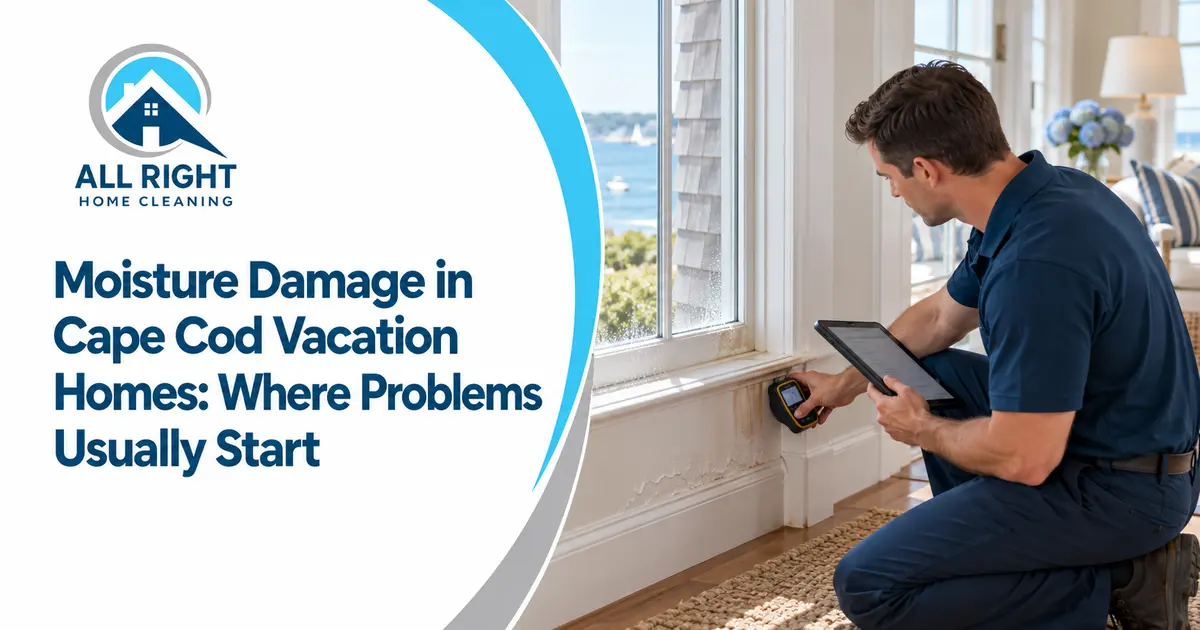
The coastal environment increases this risk. Humid outdoor air enters through vents, gaps, doors, and window seals. When that air reaches a cool basement wall, pipe, floor, or air conditioned room, water vapor can condense. Wind driven rain, salt residue, blocked drainage, plumbing leaks, and inactive ventilation systems add separate moisture sources.
A Deep Cleaning Service can remove accumulated dust, salt residue, organic debris, surface mildew, and contaminants from materials that remain safe to clean. It can also expose warning signs that were hidden beneath furniture, stored items, or neglected buildup. Cleaning cannot repair an active leak, replace decayed building materials, or substitute for professional mold remediation.
The correct order is simple:
- Find the source of moisture.
- Stop or control the source.
- Determine which materials can be cleaned.
- Remove contamination safely.
- Improve ventilation, drainage, monitoring, and seasonal oversight.
Cleaning without moisture control may improve appearance temporarily, but the underlying damage can continue.
Why Moisture Damage Often Begins Before the Homeowner Sees It
A vacation home can remain closed for months while temperature, humidity, groundwater, rain, and air pressure continue to change. The building does not become inactive simply because nobody is living there.
Moisture can enter as liquid water through a roof, window, pipe, foundation crack, or damaged exterior seal. It can also enter as invisible water vapor carried by humid air. Once inside, that vapor may collect on cooler surfaces as condensation.
Mold growth is not the original problem. Mold is evidence that moisture, a suitable surface, and enough time were present together. Cleaning visible growth without identifying the moisture source addresses the symptom rather than the cause.
In seasonal homes, the delay between the beginning of a moisture problem and its discovery increases the potential damage. A small plumbing drip that would be noticed immediately in an occupied home may continue for weeks in an empty property. A basement that feels comfortable in winter may become damp when warm summer air reaches cold foundation walls.
Where Does Moisture Damage Usually Start in a Cape Cod Vacation Home?
Moisture damage often starts in areas that homeowners do not inspect during a quick arrival visit. The highest risk locations are usually below the main living space, around the exterior envelope, or near systems that produce or transport water.
| Location | Common Moisture Mechanism | Early Warning Sign | First Action |
| Basement | Ground moisture, condensation, drainage failure | Musty odor or damp masonry | Measure humidity and inspect drainage |
| Crawl space | Exposed soil, humid air, plumbing leakage | Damp wood or insulation | Inspect the ground barrier and plumbing |
| Windows | Failed seal, rain entry, condensation | Staining or swollen trim | Check glass, tracks, caulk, and sill |
| Attic | Roof leakage or indoor air condensation | Dark sheathing or wet insulation | Inspect roofing, ventilation, and air leakage |
| Bathroom | Weak exhaust or plumbing leakage | Peeling paint or stained grout | Test ventilation and inspect fixtures |
| Kitchen | Supply line, drain, or appliance leakage | Swollen cabinet base | Inspect beneath sinks and appliances |
| Mechanical room | Condensate or equipment drainage failure | Standing water or corrosion | Check drain pans, lines, and equipment |
| Exterior wall | Wind driven rain or failed flashing | Bubbling paint or soft drywall | Inspect the building envelope |
A stain may show where water became visible, but it may not identify where the water entered. Moisture can move along framing, insulation, pipes, masonry, and floor assemblies before appearing on an interior surface.
Why Are Basements and Crawl Spaces Common Starting Points?
Basements and crawl spaces are naturally vulnerable because they sit close to soil, groundwater, cool masonry, and drainage systems. Concrete can look dry while still releasing moisture vapor into the indoor air.
Warm coastal air can create a specific summer problem. When humid air enters a cool basement, its temperature drops near the foundation walls and floor. As the air cools, its capacity to hold moisture decreases. The result can be elevated surface humidity or visible condensation.
Opening basement windows is not always a solution. If the outdoor air is warm and humid, additional ventilation may introduce more moisture than it removes. Mechanical dehumidification and controlled ventilation may be more appropriate, depending on the building.
Common basement and crawl space sources include:
- Moisture moving through exposed soil or porous masonry
- Downspouts releasing water too close to the foundation
- Ground sloping toward the house
- Open sump areas or poorly sealed crawl space floors
- Plumbing leaks above ceilings or beneath floor systems
- Dryer vents or equipment exhausting moisture into the space
- Humid outdoor air entering through open vents and gaps
These sources can operate at the same time. A dehumidifier may reduce airborne moisture, but it will not correct rainwater collecting against the foundation or a leaking supply line.
How Do Windows and Exterior Doors Allow Moisture Inside?
Windows are one of the clearest places to observe the combined effects of coastal air, salt residue, rain, and temperature differences. Salt carried through marine air settles on glass, screens, tracks, frames, and metal hardware. That residue attracts and retains moisture on the surface.
The visible dirt is only part of the concern. When tracks remain packed with residue, drainage openings may not perform properly. When caulk separates or wood trim begins to deteriorate, rain can move beyond the visible frame and into the wall assembly.
Homeowners should inspect:
- Interior and exterior caulk joints
- Window tracks and drainage openings
- Wood sills and lower corners
- Discoloration beneath the window
- Rust or corrosion on locks and fasteners
- Soft drywall or swollen trim
- Condensation between panes or on interior glass
Cleaning these areas improves more than appearance. It removes material that can hold moisture and makes failed seals, corrosion, staining, and deterioration easier to see.
How Can Roof and Attic Problems Create Hidden Damage?
A roof leak does not always produce an immediate ceiling stain. Water may follow a rafter, pipe, cable, or insulation layer before it reaches a visible surface.
Attic moisture may also come from inside the home. Warm, moist indoor air can enter the attic through ceiling gaps, recessed fixtures, access panels, bathroom exhaust connections, and other penetrations. When that air reaches cold roof sheathing, condensation can form.
Important attic warning signs include:
- Darkened roof sheathing
- Wet or compressed insulation
- Rusted fasteners
- Staining around vents and penetrations
- A musty odor near the attic opening
- Bathroom exhaust ducts ending inside the attic
- Frost or condensation during cold conditions
An attic inspection should determine whether the moisture is coming from exterior water entry, indoor air leakage, inadequate ventilation, or more than one source. Cleaning the room below will not correct moisture that remains active above the ceiling.
How Do Plumbing and Mechanical Systems Create Moisture Problems?
Plumbing leaks are especially destructive in an unoccupied property because there may be no daily activity to reveal them. Supply connections beneath sinks, refrigerator lines, toilet seals, washing machine hoses, water heaters, and shutoff valves can release small amounts of water without causing an immediate flood.
Mechanical equipment can create separate risks. Air conditioning systems remove moisture from indoor air, but the collected water must drain correctly. A blocked condensate line, damaged pan, or improperly directed discharge can wet flooring, walls, or mechanical spaces.
Before reopening a seasonal home, check:
- Cabinet floors beneath every sink
- Areas around toilets and tubs
- Refrigerator and ice maker connections
- Washing machine supply and drain lines
- Water heater base and nearby flooring
- Air conditioning drain pans and condensate lines
- Plumbing penetrations through walls and floors
This inspection should happen before belongings are unpacked. Once cabinets, closets, and storage areas are filled, small stains and damaged surfaces become harder to detect.
Why Does the Cape Cod Coastal Climate Increase Moisture Risk?
Cape Cod homes face overlapping sources of moisture. The region experiences humid air, coastal storms, wind driven rain, salt exposure, seasonal temperature changes, and periods when vacation properties remain closed.
The important point is not that every coastal home will develop mold. The important point is that coastal conditions reduce the margin for neglect. Minor maintenance defects can become moisture pathways when rain, humidity, salt residue, and long periods without inspection occur together.
How Does Humid Coastal Air Affect an Unoccupied Home?
Humidity is the amount of water vapor present in the air. Relative humidity describes how close the air is to holding the maximum amount of moisture possible at a particular temperature.
Temperature matters because warm air can hold more water vapor than cool air. When warm, humid air touches a cooler pipe, concrete wall, tile floor, window, or air conditioned surface, the air near that surface cools. Moisture may then collect as condensation.
This explains why a basement can become damp on a hot summer day even when it is not raining. Outdoor air may enter the home, reach the cool foundation, and deposit moisture on or near the surface.
What Materials Are Most Vulnerable?
Moisture does not affect every building material in the same way. Nonporous surfaces may often be cleaned if they remain intact. Porous materials can absorb water and conceal contamination below the surface.
| Material | Response to Moisture | Possible Result |
| Concrete | Absorbs and releases moisture vapor | Dampness, mineral deposits, surface growth |
| Wood framing | Absorbs water and changes dimension | Swelling, staining, decay |
| Drywall | Absorbs water through paper and gypsum | Softening, staining, hidden mold |
| Insulation | Holds moisture and dries slowly | Reduced performance and concealed growth |
| Carpet and padding | Trap water, dust, and organic matter | Odor, staining, microbial growth |
| Upholstery | Absorbs humidity and spills | Musty odor and spotting |
| Metal hardware | Reacts with moisture and salt | Corrosion and reduced function |
| Paint and coatings | Trap or reveal moisture beneath | Bubbling, peeling, and discoloration |
The material beneath the visible surface matters. A painted wall may appear clean even while the back of the drywall or the insulation inside the cavity remains damp.
How Does Salt Air Affect Windows and Exterior Materials?
Salt residue is abrasive, moisture attracting, and corrosive. It can accumulate on windows even when a home is not directly beside the water. Ocean facing glass and hardware often show the effect first, but marine residue can reach exterior doors, railings, screens, light fixtures, and metal fasteners.
During a detailed cleaning, we often pay close attention to lower window corners and tracks. These areas collect dust, insect debris, salt, and moisture. The buildup can conceal deteriorated caulk, blocked drainage openings, corrosion, or staining.
Cleaning cannot restore a failed window assembly. It can, however, reveal defects early enough for the homeowner to arrange repairs before interior finishes are damaged.
What Are the Earliest Signs of Hidden Moisture Damage?
The earliest sign is often an odor rather than a stain. A persistent musty smell suggests that damp materials or microbial growth may be present, even when the visible room appears clean.
Other warning signs include:
- Condensation on windows, pipes, or foundation walls
- Paint that bubbles, flakes, or separates
- Drywall that feels soft or looks discolored
- Baseboards that swell or pull away from the wall
- Wood floors that cup, warp, or develop dark edges
- Rust on fasteners, vents, appliances, or hardware
- White mineral deposits on concrete or masonry
- Stains beneath sinks or around plumbing fixtures
- Damp cardboard, fabrics, books, or stored decorations
- Increased allergy or respiratory symptoms while inside the home
These signs justify investigation, but they do not identify the source by themselves. A musty basement may involve ground moisture, condensation, drainage, plumbing, or several conditions at once.
Can a Home Have Moisture Damage Without Visible Mold?
Yes. Moisture can remain behind drywall, beneath flooring, inside cabinets, above ceilings, or within insulation. Visible mold is not required for water damage to exist.
A homeowner should not assume that a clean painted surface proves the wall assembly is dry. Fresh paint can conceal staining, while cabinets and furniture can block airflow and hide damaged baseboards.
Odor, material movement, recurring staining, surface condensation, and unexplained corrosion can all justify a closer inspection.
What Should Homeowners Do When They Discover Moisture or Mold?
The first priority is to determine whether water is still entering the property. Cleaning should not begin blindly, especially when contamination may be extensive or concealed.
Use this sequence:
- Identify the affected rooms and materials.
- Look for active plumbing, roofing, drainage, or equipment failures.
- Measure indoor humidity and compare conditions across the home.
- Photograph visible damage before moving or cleaning materials.
- Keep people with respiratory sensitivity away from the affected area.
- Contact the appropriate building, moisture, mold, or mechanical professional when the source or extent is uncertain.
- Begin cleaning only after the source is controlled and the scope is understood.
This sequence protects both the occupants and the property. Disturbing contaminated porous materials can release particles into the air and spread debris beyond the original area.
Which Materials Can Be Cleaned?
Intact glass, metal, sealed tile, and many other nonporous surfaces may be suitable for professional cleaning after the moisture source is corrected. Some sealed wood and painted surfaces may also be cleanable when damage is limited and the coating remains intact.
Saturated drywall, wet insulation, deteriorated particleboard, heavily contaminated carpet padding, and decayed wood may require removal or specialized treatment. The decision depends on the material, the duration of exposure, the amount of contamination, and whether the affected area can be reached safely.
A cleaning company should not present ordinary surface cleaning as structural repair or mold remediation. Clear limits are part of responsible service.
How Does a Deep Cleaning Service Address Moisture Related Contamination?
A Deep Cleaning Service is valuable when a seasonal home has accumulated dust, salt film, organic debris, stale residue, light surface spotting, and contamination on materials that remain safe to clean.
The service should begin with observation. Cleaning crews need to notice water stains, soft materials, active dripping, unusual odors, corrosion, swollen cabinetry, and visible growth before those signs are washed away or covered.
A moisture focused deep cleaning may include:
- Detailed cleaning of window glass, frames, sills, screens, and tracks
- Removal of dust and residue from baseboards, trim, doors, and reachable vents
- Cleaning beneath movable furniture and around stored belongings
- Detailed cleaning inside cabinets and closets when accessible
- Removal of organic debris that can support surface contamination
- Cleaning of intact bathroom and kitchen surfaces
- Documentation of areas that require repair, assessment, or remediation
The purpose is not to make damage disappear. The purpose is to restore cleanable surfaces, improve visibility, and separate routine contamination from conditions that require another professional.
Deep Cleaning Compared With Mold Remediation
| Service | Primary Purpose | Appropriate Conditions | Important Limit |
| Deep Cleaning Service | Remove soil, residue, dust, and cleanable surface contamination | Intact surfaces after moisture control | Does not repair leaks or structural damage |
| Professional Cleaning Services | Maintain sanitary conditions and inspect commonly neglected areas | Seasonal opening, closing, and scheduled care | Cannot certify that a building is mold free |
| Mold remediation | Contain and remove significant mold contamination | Extensive, hidden, or technically complex growth | Must follow a defined remediation scope |
| Building repair | Correct water entry and replace damaged components | Failed roof, plumbing, flashing, drainage, or materials | Cleaning alone cannot perform this function |
| HVAC service | Correct equipment, airflow, drainage, or duct problems | Condensate failure or mechanical moisture issue | Requires appropriate mechanical expertise |
The correct service depends on the cause and scale of the problem. A home may need more than one professional. For example, a plumber may stop a leak, a remediation specialist may remove contaminated drywall, and a cleaning team may complete detailed cleaning after the repair work.
What Does a Practical Cape Cod Moisture Inspection Look Like?
Consider a representative seasonal home that remained closed through winter and early spring. When the owners arrived, they noticed a stale odor near the basement stairs. The upstairs rooms looked clean, so they initially assumed the house only needed fresh air.
The basement told a different story. Cardboard boxes stored directly on the concrete floor felt soft. A wood shelf against the foundation had dark spotting. Window glass showed condensation, and the lower tracks contained salt residue, dust, and insect debris.
The likely problem was not one dramatic flood. Several smaller conditions had overlapped:
- Humid outdoor air entered the basement.
- The foundation remained cooler than the incoming air.
- Moisture collected near the masonry and stored materials.
- Cardboard and wood absorbed moisture.
- Limited airflow prevented quick drying.
- Months passed before anyone inspected the area.
The appropriate response would begin with humidity measurement and an inspection of drainage, plumbing, and foundation conditions. Damaged storage materials would need to be evaluated and removed carefully. Cleanable surfaces could then receive detailed cleaning, followed by dehumidification and improved storage practices.
The prevention plan would include keeping boxes off the floor, leaving space between storage and exterior walls, monitoring humidity, checking the property after storms, and arranging inspections during the closed season.
How Much Can Moisture Prevention Save Compared With Repair?
Exact costs depend on the size of the home, the source of water, the materials affected, accessibility, and the duration of exposure. However, prevention usually requires less disruption than repairing concealed damage.
| Preventive Action | Relative Effort | Damage It May Help Prevent |
| Indoor humidity monitoring | Low | Persistent dampness and delayed detection |
| Seasonal property inspection | Low to moderate | Undetected leaks and storm entry |
| Window track and frame cleaning | Low to moderate | Residue buildup, corrosion, and hidden seal failure |
| Gutter and drainage maintenance | Moderate | Foundation and basement water entry |
| Plumbing inspection before closure | Moderate | Long duration supply and drain leaks |
| Dehumidification | Moderate | Condensation and elevated indoor humidity |
| Roof and flashing maintenance | Moderate | Attic, ceiling, insulation, and wall damage |
| Repair after concealed water damage | High | May involve demolition and material replacement |
| Extensive mold remediation | High | May require containment and specialized removal |
| Structural repair | High | May involve framing, flooring, walls, and exterior systems |
The cheapest service on the day of cleaning is not always the lowest cost decision. If a crew removes visible residue but ignores a soft wall, active leak, or persistent odor, the homeowner may pay for cleaning again while the damage continues.
When Should a Cape Cod Vacation Home Be Inspected and Cleaned?
Seasonal care should follow the life cycle of the property rather than waiting for visible dirt.
Before Closing the Home
The home should be clean and dry before extended vacancy. Food residue, dust, damp textiles, full vacuum containers, and wet cleaning materials should not remain behind.
Before departure:
- Inspect plumbing connections and shutoff points
- Clean kitchen and bathroom surfaces thoroughly
- Dry showers, tubs, sinks, and appliance interiors
- Remove damp fabrics and organic waste
- Clean window tracks and inspect seals
- Check basement humidity and drainage
- Confirm that dehumidifiers and condensate systems drain correctly
- Leave interior doors positioned to support airflow where appropriate
A clean closing condition creates a reliable baseline. If staining or odor appears later, it is easier to recognize that something changed during the vacancy.
While the Property Is Unoccupied
A local inspection should focus on changes rather than simple entry and exit. The person checking the home should look beneath sinks, around mechanical equipment, at ceilings, near windows, and throughout the basement or crawl space.
After severe weather, the inspection should include the side of the home that received the strongest wind and rain. A dry living room does not prove that the attic, wall cavities, basement, or window assemblies remained dry.
Before the Summer Reopening
The reopening inspection should happen before guests arrive and before luggage, groceries, and linens fill the rooms.
Professional Cleaning Services should have access to:
- Window tracks and sills
- Cabinets beneath sinks
- Closets and storage areas
- Baseboards behind movable furniture
- Basement and mechanical spaces
- Bathrooms that remained unused
- Air vents and accessible equipment surfaces
Once these areas are inspected, the cleaning plan can distinguish ordinary seasonal buildup from moisture related conditions that need repair or specialist attention.
How Can Owners Reduce Moisture Risk Between Visits?
No single device or cleaning appointment can prevent every moisture problem. Effective prevention combines building maintenance, humidity control, drainage, cleaning, inspection, and documentation.
The most practical measures are:
- Use reliable humidity monitors in vulnerable areas.
- Inspect basements and crawl spaces during humid weather.
- Keep gutters, downspouts, and exterior drainage clear.
- Maintain window seals, roof penetrations, and flashing.
- Service air conditioning and condensate systems.
- Keep stored items above basement floors.
- Leave space between furniture and exterior walls.
- Clean salt residue from windows and metal components.
- Arrange property checks after major storms.
- Document stains, odors, and repairs with dated photographs.
Prevention works best when responsibility is clear. Someone must know who checks the home, what areas are inspected, when the inspection occurs, and what conditions require immediate action.
What Is the Best Next Step for a Damp or Musty Vacation Home?
If a Cape Cod vacation home smells musty, shows condensation, or contains visible staining, do not begin with fragrance, paint, or superficial wiping. Start by finding the moisture source and determining which materials are affected.
A Deep Cleaning Service is appropriate after active moisture has been controlled and the remaining surfaces are safe to clean. Professional Cleaning Services can also support seasonal opening and closing routines by removing residue, exposing neglected areas, and documenting warning signs.
When the problem includes extensive visible growth, recurring water entry, damaged drywall, wet insulation, decayed wood, contaminated ventilation components, or unexplained health symptoms, cleaning alone is not enough. The property may require qualified mold, building, plumbing, roofing, or mechanical professionals before detailed cleaning can proceed safely.
Moisture Damage in Cape Cod Vacation Homes: Where Problems Usually Start
Moisture damage in a Cape Cod vacation home usually begins in basements, crawl spaces, window assemblies, attics, plumbing areas, and rooms with poor airflow. The first warning may be a musty odor, damp concrete, fogged windows, swollen trim, peeling paint, or spotting on wood and fabric. By the time visible mold appears, moisture may already have reached porous materials such as drywall, insulation, subflooring, and stored belongings.
The coastal environment increases this risk. Humid outdoor air enters through vents, gaps, doors, and window seals. When that air reaches a cool basement wall, pipe, floor, or air conditioned room, water vapor can condense. Wind driven rain, salt residue, blocked drainage, plumbing leaks, and inactive ventilation systems add separate moisture sources.
A Deep Cleaning Service can remove accumulated dust, salt residue, organic debris, surface mildew, and contaminants from materials that remain safe to clean. It can also expose warning signs hidden beneath furniture, stored items, or neglected buildup. Cleaning cannot repair an active leak, replace decayed building materials, or substitute for professional mold remediation.
The correct response follows five steps:
- Find the source of moisture.
- Stop or control the source.
- Determine which materials can be cleaned.
- Remove contamination safely.
- Improve ventilation, drainage, monitoring, and seasonal oversight.
Cleaning without moisture control may improve appearance temporarily, but the underlying damage can continue.
Why Moisture Damage Often Begins Before the Homeowner Sees It
A vacation home can remain closed for months while temperature, humidity, groundwater, rain, and air pressure continue to change. The building does not become inactive simply because nobody is living there.
Moisture can enter as liquid water through a roof, window, pipe, foundation crack, or damaged exterior seal. It can also enter as invisible water vapor carried by humid air. Once inside, that vapor may collect on cooler surfaces as condensation.
Mold growth is not the original problem. Mold is evidence that moisture, a suitable surface, and enough time were present together. The United States Environmental Protection Agency explains that controlling moisture is the key to controlling mold. Cleaning visible growth without fixing the water problem allows the condition to return. This principle is especially important when evaluating mold and moisture in coastal homes.
In seasonal homes, the delay between the beginning of a moisture problem and its discovery increases the potential damage. A small plumbing drip that would be noticed quickly in an occupied home may continue for weeks in an empty property. A basement that feels comfortable in winter may become damp when warm summer air reaches cold foundation walls.
For a deeper explanation of what changes inside a property during an extended vacancy, homeowners can review what happens to a house when it stays empty for weeks.
Where Does Moisture Damage Usually Start in a Cape Cod Vacation Home?
Moisture damage often starts in areas homeowners do not inspect during a quick arrival visit. The highest risk locations are usually below the main living space, around the exterior envelope, or near systems that produce, collect, or transport water.
| Location | Common Moisture Mechanism | Early Warning Sign | First Action |
| Basement | Ground moisture, condensation, drainage failure | Musty odor or damp masonry | Measure humidity and inspect drainage |
| Crawl space | Exposed soil, humid air, plumbing leakage | Damp wood or insulation | Inspect the ground barrier and plumbing |
| Windows | Failed seal, rain entry, condensation | Staining or swollen trim | Check glass, tracks, sealant, and sill |
| Attic | Roof leakage or indoor air condensation | Dark sheathing or wet insulation | Inspect roofing, ventilation, and air leakage |
| Bathroom | Weak exhaust or plumbing leakage | Peeling paint or stained grout | Test ventilation and inspect fixtures |
| Kitchen | Supply line, drain, or appliance leakage | Swollen cabinet base | Inspect beneath sinks and appliances |
| Mechanical room | Condensate or equipment drainage failure | Standing water or corrosion | Check drain pans, lines, and equipment |
| Exterior wall | Wind driven rain or failed flashing | Bubbling paint or soft drywall | Inspect the building envelope |
A stain may show where water became visible, but it may not identify where the water entered. Moisture can move along framing, insulation, pipes, masonry, and floor assemblies before appearing on an interior surface.
Why Are Basements and Crawl Spaces Common Starting Points?
Basements and crawl spaces are naturally vulnerable because they sit close to soil, groundwater, cool masonry, and drainage systems. Concrete can look dry while still releasing moisture vapor into the indoor air.
Warm coastal air can create a specific summer problem. When humid air enters a cool basement, its temperature drops near the foundation walls and floor. As the air cools, its capacity to hold moisture decreases. The result can be elevated surface humidity or visible condensation.
Opening basement windows is not always a solution. If the outdoor air is warm and humid, additional ventilation may introduce more moisture than it removes. Mechanical dehumidification and controlled ventilation may be more appropriate, depending on the building and current outdoor conditions.
Common basement and crawl space sources include:
- Moisture moving through exposed soil or porous masonry
- Downspouts releasing water too close to the foundation
- Ground sloping toward the house
- Open sump areas or poorly sealed crawl space floors
- Plumbing leaks above ceilings or beneath floor systems
- Dryer vents or equipment exhausting moisture into the space
- Humid outdoor air entering through open vents and gaps
These sources can operate at the same time. A dehumidifier may reduce airborne moisture, but it will not correct rainwater collecting against the foundation or a leaking supply line.
How Do Windows and Exterior Doors Allow Moisture Inside?
Windows are one of the clearest places to observe the combined effects of coastal air, salt residue, rain, and temperature differences. Salt carried through marine air settles on glass, screens, tracks, frames, and metal hardware. That residue can retain moisture on the surface and contribute to corrosion.
The visible dirt is only part of the concern. When tracks remain packed with residue, drainage openings may not perform properly. When sealant separates or wood trim begins to deteriorate, rain can move beyond the visible frame and into the wall assembly.
Homeowners should inspect:
- Interior and exterior sealant joints
- Window tracks and drainage openings
- Wood sills and lower corners
- Discoloration beneath the window
- Rust or corrosion on locks and fasteners
- Soft drywall or swollen trim
- Condensation between panes or on interior glass
Cleaning these areas improves more than appearance. It removes material that can retain moisture and makes failed seals, corrosion, staining, and deterioration easier to see.
For a broader look at how the local environment affects seasonal properties, read this guide to humidity and salt air damage. The relationship between humidity, salt residue, vacancy, and surface deterioration deserves its own topic because it extends beyond mold prevention.
How Can Roof and Attic Problems Create Hidden Damage?
A roof leak does not always produce an immediate ceiling stain. Water may follow a rafter, pipe, cable, or insulation layer before it reaches a visible surface.
Attic moisture may also come from inside the home. Warm, moist indoor air can enter the attic through ceiling gaps, recessed fixtures, access panels, bathroom exhaust connections, and other penetrations. When that air reaches cold roof sheathing, condensation can form.
Important attic warning signs include:
- Darkened roof sheathing
- Wet or compressed insulation
- Rusted fasteners
- Staining around vents and penetrations
- A musty odor near the attic opening
- Bathroom exhaust ducts ending inside the attic
- Frost or condensation during cold conditions
An attic inspection should determine whether the moisture is coming from exterior water entry, indoor air leakage, inadequate ventilation, or more than one source. Cleaning the room below will not correct moisture that remains active above the ceiling.
How Do Plumbing and Mechanical Systems Create Moisture Problems?
Plumbing leaks are especially destructive in an unoccupied property because there may be no daily activity to reveal them. Supply connections beneath sinks, refrigerator lines, toilet seals, washing machine hoses, water heaters, and shutoff valves can release small amounts of water without causing an immediate flood.
Mechanical equipment can create separate risks. Air conditioning systems remove moisture from indoor air, but the collected water must drain correctly. A blocked condensate line, damaged pan, or improperly directed discharge can wet flooring, walls, or mechanical spaces.
Before reopening a seasonal home, check:
- Cabinet floors beneath every sink
- Areas around toilets and tubs
- Refrigerator and ice maker connections
- Washing machine supply and drain lines
- Water heater base and nearby flooring
- Air conditioning drain pans and condensate lines
- Plumbing penetrations through walls and floors
This inspection should happen before belongings are unpacked. Once cabinets, closets, and storage areas are filled, small stains and damaged surfaces become harder to detect.
Why Does the Cape Cod Coastal Climate Increase Moisture Risk?
Cape Cod homes face overlapping sources of moisture. The region experiences humid air, coastal storms, wind driven rain, salt exposure, seasonal temperature changes, and periods when vacation properties remain closed.
The important point is not that every coastal home will develop mold. The important point is that coastal conditions reduce the margin for neglect. Minor maintenance defects can become moisture pathways when rain, humidity, salt residue, and long periods without inspection occur together.
How Does Humid Coastal Air Affect an Unoccupied Home?
Humidity is the amount of water vapor present in the air. Relative humidity describes how close the air is to holding the maximum amount of moisture possible at a particular temperature.
Temperature matters because warm air can hold more water vapor than cool air. When warm, humid air touches a cooler pipe, concrete wall, tile floor, window, or air conditioned surface, the air near that surface cools. Moisture may then collect as condensation.
This explains why a basement can become damp on a hot summer day even when it is not raining. Outdoor air may enter the home, reach the cool foundation, and deposit moisture on or near the surface.
Humidity should be measured rather than guessed. A room can feel comfortable while a cold wall, window, or pipe reaches conditions that support condensation.
What Materials Are Most Vulnerable?
Moisture does not affect every building material in the same way. Nonporous surfaces may often be cleaned if they remain intact. Porous materials can absorb water and conceal contamination below the surface.
| Material | Response to Moisture | Possible Result |
| Concrete | Absorbs and releases moisture vapor | Dampness, mineral deposits, surface growth |
| Wood framing | Absorbs water and changes dimension | Swelling, staining, decay |
| Drywall | Absorbs water through paper and gypsum | Softening, staining, hidden mold |
| Insulation | Retains moisture and dries slowly | Reduced performance and concealed growth |
| Carpet and padding | Trap water, dust, and organic matter | Odor, staining, microbial growth |
| Upholstery | Absorbs humidity and spills | Musty odor and spotting |
| Metal hardware | Reacts with moisture and salt | Corrosion and reduced function |
| Paint and coatings | Trap or reveal moisture beneath | Bubbling, peeling, and discoloration |
The material beneath the visible surface matters. A painted wall may appear clean even while the back of the drywall or the insulation inside the cavity remains damp.
How Does Salt Air Affect Windows and Exterior Materials?
Salt residue is abrasive, moisture attracting, and corrosive. It can accumulate on windows even when a home is not directly beside the water. Ocean facing glass and hardware often show the effect first, but marine residue can reach exterior doors, railings, screens, light fixtures, and metal fasteners.
During detailed cleaning, special attention should be given to lower window corners and tracks. These areas collect dust, insect debris, salt, and moisture. The buildup can conceal deteriorated sealant, blocked drainage openings, corrosion, or staining.
Cleaning cannot restore a failed window assembly. It can reveal defects early enough for the homeowner to arrange repairs before interior finishes experience further damage.
This subject connects directly with window care, seasonal property maintenance, exterior envelope inspection, and coastal corrosion. Each topic can support a separate article without repeating the purpose of this moisture damage guide.
What Are the Earliest Signs of Hidden Moisture Damage?
The earliest sign is often an odor rather than a stain. A persistent musty smell suggests that damp materials or microbial growth may be present, even when the visible room appears clean.
Other warning signs include:
- Condensation on windows, pipes, or foundation walls
- Paint that bubbles, flakes, or separates
- Drywall that feels soft or looks discolored
- Baseboards that swell or pull away from the wall
- Wood floors that cup, warp, or develop dark edges
- Rust on fasteners, vents, appliances, or hardware
- White mineral deposits on concrete or masonry
- Stains beneath sinks or around plumbing fixtures
- Damp cardboard, fabrics, books, or stored decorations
- Increased allergy or respiratory symptoms while inside the home
These signs justify investigation, but they do not identify the source by themselves. A musty basement may involve ground moisture, condensation, drainage, plumbing, or several conditions at once.
Can a Home Have Moisture Damage Without Visible Mold?
Yes. Moisture can remain behind drywall, beneath flooring, inside cabinets, above ceilings, or within insulation. Visible mold is not required for water damage to exist.
A homeowner should not assume that a clean painted surface proves the wall assembly is dry. Fresh paint can conceal staining, while cabinets and furniture can block airflow and hide damaged baseboards.
Odor, material movement, recurring staining, surface condensation, and unexplained corrosion can all justify a closer inspection. If the suspected moisture is hidden inside a wall, ceiling, or ventilation system, destructive investigation or specialized testing may require a qualified professional.
What Should Homeowners Do When They Discover Moisture or Mold?
The first priority is to determine whether water is still entering the property. Cleaning should not begin blindly, especially when contamination may be extensive or concealed.
Use this sequence:
- Identify the affected rooms and materials.
- Look for active plumbing, roofing, drainage, or equipment failures.
- Measure indoor humidity and compare conditions across the home.
- Photograph visible damage before moving or cleaning materials.
- Keep people with respiratory sensitivity away from the affected area.
- Contact the appropriate building, moisture, mold, or mechanical professional when the source or extent is uncertain.
- Begin cleaning only after the source is controlled and the scope is understood.
This sequence protects both the occupants and the property. Disturbing contaminated porous materials can release particles into the air and spread debris beyond the original area.
Which Materials Can Be Cleaned?
Intact glass, metal, sealed tile, and many other nonporous surfaces may be suitable for professional cleaning after the moisture source is corrected. Some sealed wood and painted surfaces may also be cleanable when damage is limited and the coating remains intact.
Saturated drywall, wet insulation, deteriorated particleboard, heavily contaminated carpet padding, and decayed wood may require removal or specialized treatment. The decision depends on the material, the duration of exposure, the amount of contamination, and whether the affected area can be reached safely.
A cleaning company should not present ordinary surface cleaning as structural repair or mold remediation. Clear service limits are part of responsible property care.
How Does a Deep Cleaning Service Address Moisture Related Contamination?
A Deep Cleaning Service is valuable when a seasonal home has accumulated dust, salt film, organic debris, stale residue, light surface spotting, and contamination on materials that remain safe to clean.
The service should begin with observation. Cleaning crews need to notice water stains, soft materials, active dripping, unusual odors, corrosion, swollen cabinetry, and visible growth before those signs are washed away or covered.
A moisture focused deep cleaning may include:
- Detailed cleaning of window glass, frames, sills, screens, and tracks
- Removal of dust and residue from baseboards, trim, doors, and reachable vents
- Cleaning beneath movable furniture and around stored belongings
- Detailed cleaning inside accessible cabinets and closets
- Removal of organic debris that can support surface contamination
- Cleaning of intact bathroom and kitchen surfaces
- Documentation of areas that require repair, assessment, or remediation
The purpose is not to make damage disappear. The purpose is to restore cleanable surfaces, improve visibility, and separate routine contamination from conditions that require another professional.
Deep Cleaning Compared With Mold Remediation
| Service | Primary Purpose | Appropriate Conditions | Important Limit |
| Deep Cleaning Service | Remove soil, residue, dust, and cleanable surface contamination | Intact surfaces after moisture control | Does not repair leaks or structural damage |
| Professional Cleaning Services | Maintain sanitary conditions and inspect commonly neglected areas | Seasonal opening, closing, and scheduled care | Cannot certify that a building is mold free |
| Mold remediation | Contain and remove significant mold contamination | Extensive, hidden, or technically complex growth | Requires a defined remediation scope |
| Building repair | Correct water entry and replace damaged components | Failed roof, plumbing, flashing, drainage, or materials | Cleaning alone cannot perform this function |
| HVAC service | Correct equipment, airflow, drainage, or duct problems | Condensate failure or mechanical moisture issue | Requires appropriate mechanical expertise |
The correct service depends on the cause and scale of the problem. A home may need more than one professional. A plumber may stop a leak, a remediation specialist may remove contaminated drywall, and a cleaning team may complete detailed cleaning after the repair work.
What Are the Advantages and Limitations of a Deep Cleaning Service?
| Advantages | Limitations |
| Removes salt, dust, residue, and organic buildup | Does not stop active water intrusion |
| Exposes hidden stains and damaged surfaces | Does not replace mold assessment |
| Improves cleanliness before seasonal occupancy | Cannot restore decayed building materials |
| Reaches areas omitted during routine cleaning | Cannot repair roofing, plumbing, or drainage |
| Supports property documentation | Cannot guarantee that concealed cavities are dry |
| Helps prepare the home for owners and guests | May need to wait until remediation is complete |
A Deep Cleaning Service delivers the greatest value when it is placed correctly within the restoration sequence. Cleaning too early can conceal evidence, spread contamination, or require the work to be repeated after repairs.
What Does a Practical Cape Cod Moisture Inspection Look Like?
Consider a representative seasonal home that remained closed through winter and early spring. When the owners arrived, they noticed a stale odor near the basement stairs. The upstairs rooms looked clean, so they initially assumed the house only needed fresh air.
The basement told a different story. Cardboard boxes stored directly on the concrete floor felt soft. A wood shelf against the foundation had dark spotting. Window glass showed condensation, and the lower tracks contained salt residue, dust, and insect debris.
The likely problem was not one dramatic flood. Several smaller conditions had overlapped:
- Humid outdoor air entered the basement.
- The foundation remained cooler than the incoming air.
- Moisture collected near the masonry and stored materials.
- Cardboard and wood absorbed moisture.
- Limited airflow prevented quick drying.
- Months passed before anyone inspected the area.
The appropriate response would begin with humidity measurement and an inspection of drainage, plumbing, and foundation conditions. Damaged storage materials would need to be evaluated and removed carefully. Cleanable surfaces could then receive detailed cleaning, followed by dehumidification and improved storage practices.
The prevention plan would include keeping boxes off the floor, leaving space between storage and exterior walls, monitoring humidity, checking the property after storms, and arranging inspections during the closed season.
This example also connects with seasonal vacancy management, basement storage practices, storm inspections, and property readiness. These related topics answer different questions and should support the main article through internal links rather than being compressed into one oversized section.
How Much Can Moisture Prevention Save Compared With Repair?
Exact costs depend on the size of the home, the source of water, the materials affected, accessibility, and the duration of exposure. Prevention usually requires less disruption than repairing concealed damage.
| Preventive Action | Relative Effort | Damage It May Help Prevent |
| Indoor humidity monitoring | Low | Persistent dampness and delayed detection |
| Seasonal property inspection | Low to moderate | Undetected leaks and storm entry |
| Window track and frame cleaning | Low to moderate | Residue buildup, corrosion, and hidden seal failure |
| Gutter and drainage maintenance | Moderate | Foundation and basement water entry |
| Plumbing inspection before closure | Moderate | Long duration supply and drain leaks |
| Dehumidification | Moderate | Condensation and elevated indoor humidity |
| Roof and flashing maintenance | Moderate | Attic, ceiling, insulation, and wall damage |
| Repair after concealed water damage | High | May involve demolition and material replacement |
| Extensive mold remediation | High | May require containment and specialized removal |
| Structural repair | High | May involve framing, flooring, walls, and exterior systems |
The cheapest service on the day of cleaning is not always the lowest cost decision. If a crew removes visible residue but ignores a soft wall, active leak, or persistent odor, the homeowner may pay for cleaning again while the damage continues.
When Should a Cape Cod Vacation Home Be Inspected and Cleaned?
Seasonal care should follow the life cycle of the property rather than waiting for visible dirt.
Before Closing the Home
The home should be clean and dry before extended vacancy. Food residue, dust, damp textiles, full vacuum containers, and wet cleaning materials should not remain behind.
Before departure:
- Inspect plumbing connections and shutoff points
- Clean kitchen and bathroom surfaces thoroughly
- Dry showers, tubs, sinks, and appliance interiors
- Remove damp fabrics and organic waste
- Clean window tracks and inspect seals
- Check basement humidity and drainage
- Confirm that dehumidifiers and condensate systems drain correctly
- Leave interior doors positioned to support airflow where appropriate
A clean closing condition creates a reliable baseline. If staining or odor appears later, it is easier to recognize that something changed during the vacancy.
While the Property Is Unoccupied
A local inspection should focus on changes rather than simple entry and exit. The person checking the home should look beneath sinks, around mechanical equipment, at ceilings, near windows, and throughout the basement or crawl space.
After severe weather, the inspection should include the side of the home that received the strongest wind and rain. A dry living room does not prove that the attic, wall cavities, basement, or window assemblies remained dry.
Before the Summer Reopening
The reopening inspection should happen before guests arrive and before luggage, groceries, and linens fill the rooms.
Professional Cleaning Services should have access to:
- Window tracks and sills
- Cabinets beneath sinks
- Closets and storage areas
- Baseboards behind movable furniture
- Basement and mechanical spaces
- Bathrooms that remained unused
- Air vents and accessible equipment surfaces
Once these areas are inspected, the cleaning plan can distinguish ordinary seasonal buildup from moisture related conditions that need repair or specialist attention.
A structured home readiness inspection before a seasonal arrival can help owners verify moisture, odors, plumbing, windows, appliances, and room conditions before the property is occupied.
How Can Owners Reduce Moisture Risk Between Visits?
No single device or cleaning appointment can prevent every moisture problem. Effective prevention combines building maintenance, humidity control, drainage, cleaning, inspection, and documentation.
The most practical measures are:
- Use reliable humidity monitors in vulnerable areas.
- Inspect basements and crawl spaces during humid weather.
- Keep gutters, downspouts, and exterior drainage clear.
- Maintain window seals, roof penetrations, and flashing.
- Service air conditioning and condensate systems.
- Keep stored items above basement floors.
- Leave space between furniture and exterior walls.
- Clean salt residue from windows and metal components.
- Arrange property checks after major storms.
- Document stains, odors, and repairs with dated photographs.
Prevention works best when responsibility is clear. Someone must know who checks the home, what areas are inspected, when the inspection occurs, and what conditions require immediate action.
What Is the Best Next Step for a Damp or Musty Vacation Home?
If a Cape Cod vacation home smells musty, shows condensation, or contains visible staining, do not begin with fragrance, paint, or superficial wiping. Start by finding the moisture source and determining which materials are affected.
A Deep Cleaning Service is appropriate after active moisture has been controlled and the remaining surfaces are safe to clean. Professional Cleaning Services can also support seasonal opening and closing routines by removing residue, exposing neglected areas, and documenting warning signs.
When the problem includes extensive visible growth, recurring water entry, damaged drywall, wet insulation, decayed wood, contaminated ventilation components, or unexplained health symptoms, cleaning alone is not enough. The property may require qualified mold, building, plumbing, roofing, or mechanical professionals before detailed cleaning can proceed safely.
Frequently Asked Questions About Moisture Damage in Cape Cod Homes
Where does moisture damage usually begin in a vacation home?
Moisture damage commonly begins in basements, crawl spaces, window assemblies, attics, areas beneath sinks, and spaces around air conditioning equipment. These locations combine cool surfaces, limited airflow, plumbing connections, or possible exterior water entry.
Why does a Cape Cod basement become damp during summer?
Warm, humid outdoor air can enter the basement and contact cooler concrete walls and floors. As the air cools, moisture condenses on those surfaces. Opening basement windows during humid weather can make the problem worse by introducing more moisture.
Can mold grow while a vacation home is empty?
Yes. Mold does not require occupants. It requires moisture and a suitable material, such as wood, paper, drywall, dust, carpet, fabric, or insulation. An unnoticed leak or persistent humidity can support growth while the property remains closed.
How quickly should wet materials be dried?
The United States Environmental Protection Agency recommends drying wet or damp materials within 24 to 48 hours whenever possible. Faster drying reduces the opportunity for mold growth and limits damage to porous materials.
What indoor humidity level helps reduce mold risk?
The EPA recommends keeping indoor relative humidity below 60 percent and ideally between 30 and 50 percent. The Centers for Disease Control and Prevention recommends keeping it no higher than 50 percent when possible. A humidity monitor should be used because comfort alone is not a reliable measurement.
Does a musty odor always mean there is mold?
A musty odor does not prove that visible mold is present, but it indicates that damp materials, stagnant air, or microbial activity may exist. The source should be investigated before fragrance, paint, or surface cleaning is used to cover the odor.
Can a Deep Cleaning Service remove mold?
A Deep Cleaning Service can address limited contamination on intact, cleanable surfaces after the moisture source has been controlled. Extensive growth, hidden contamination, damaged porous materials, or affected ventilation systems may require professional mold assessment and remediation.
The IICRC S520 Standard separates professional mold remediation from routine cleaning by establishing specific procedures, precautions, documentation, and remediation principles.
What is the difference between Professional Cleaning Services and mold remediation?
Professional Cleaning Services remove dust, salt residue, organic debris, soil, and appropriate surface contamination. Mold remediation addresses a defined mold problem through specialized containment, removal, cleaning, safety controls, and verification procedures.
Cleaning restores suitable surfaces. Remediation manages contamination that exceeds the safe or practical scope of ordinary cleaning.
Should basement windows be opened to reduce humidity?
Not automatically. If outdoor air is warm and humid while basement surfaces are cool, opening windows can increase condensation. Ventilation decisions should consider outdoor humidity, basement temperature, drainage, and whether air conditioning or dehumidification is available.
Does salt air cause mold?
Salt air does not directly create mold, but coastal residue can retain moisture and contribute to corrosion, seal deterioration, and surface buildup. When salt exposure overlaps with humidity, dust, poor airflow, and neglected maintenance, the risk of moisture related damage increases.
What should be inspected before reopening a seasonal home?
Homeowners should inspect:
- Basements and crawl spaces
- Window frames, tracks, and sills
- Ceilings and attic access points
- Cabinets beneath sinks
- Toilets, tubs, and plumbing connections
- Air conditioning pans and condensate drains
- Baseboards, closets, upholstery, and stored belongings
- Exterior drainage after severe weather
The inspection should occur before luggage, linens, groceries, and furniture block access to vulnerable areas.
When should a mold or building specialist be contacted?
A specialist should be considered when mold growth is extensive, hidden inside building cavities, connected to major water damage, affecting heating or air conditioning systems, or associated with deteriorated drywall, insulation, flooring, or structural wood.
People with asthma, mold allergies, chronic lung conditions, or weakened immune systems should seek medical guidance when exposure is a concern. Damp buildings and mold exposure have been associated with respiratory symptoms, allergic responses, asthma complications, and irritation.
Can dehumidification solve a basement moisture problem?
A dehumidifier can lower airborne moisture and reduce odor, but it does not repair poor grading, failed gutters, groundwater entry, plumbing leaks, or foundation drainage problems. The moisture source must still be identified and corrected.
How often should a Cape Cod vacation home be checked?
The property should be inspected before seasonal closure, periodically during vacancy, after significant coastal storms, and before reopening. The correct frequency depends on the home, location, drainage, building systems, and previous moisture history.
Sources Used
- United States Environmental Protection Agency: A Brief Guide to Mold, Moisture and Your Home US EPA
- United States Environmental Protection Agency: Main Ways to Control Moisture in Your Home www.epa.gov
- Centers for Disease Control and Prevention: About Mold CDC
- Centers for Disease Control and Prevention: Health Problems Associated With Damp Buildings and Mold CDC
- University of Minnesota Extension: Moisture in Basements, Causes and Solutions UMN Extension
- Cape Cod Cooperative Extension: Flood, Erosion and Coastal Hazard Resources capecod.gov
- Institute of Inspection, Cleaning and Restoration Certification: ANSI IICRC S520 Standard for Professional Mold Remediation IICRC