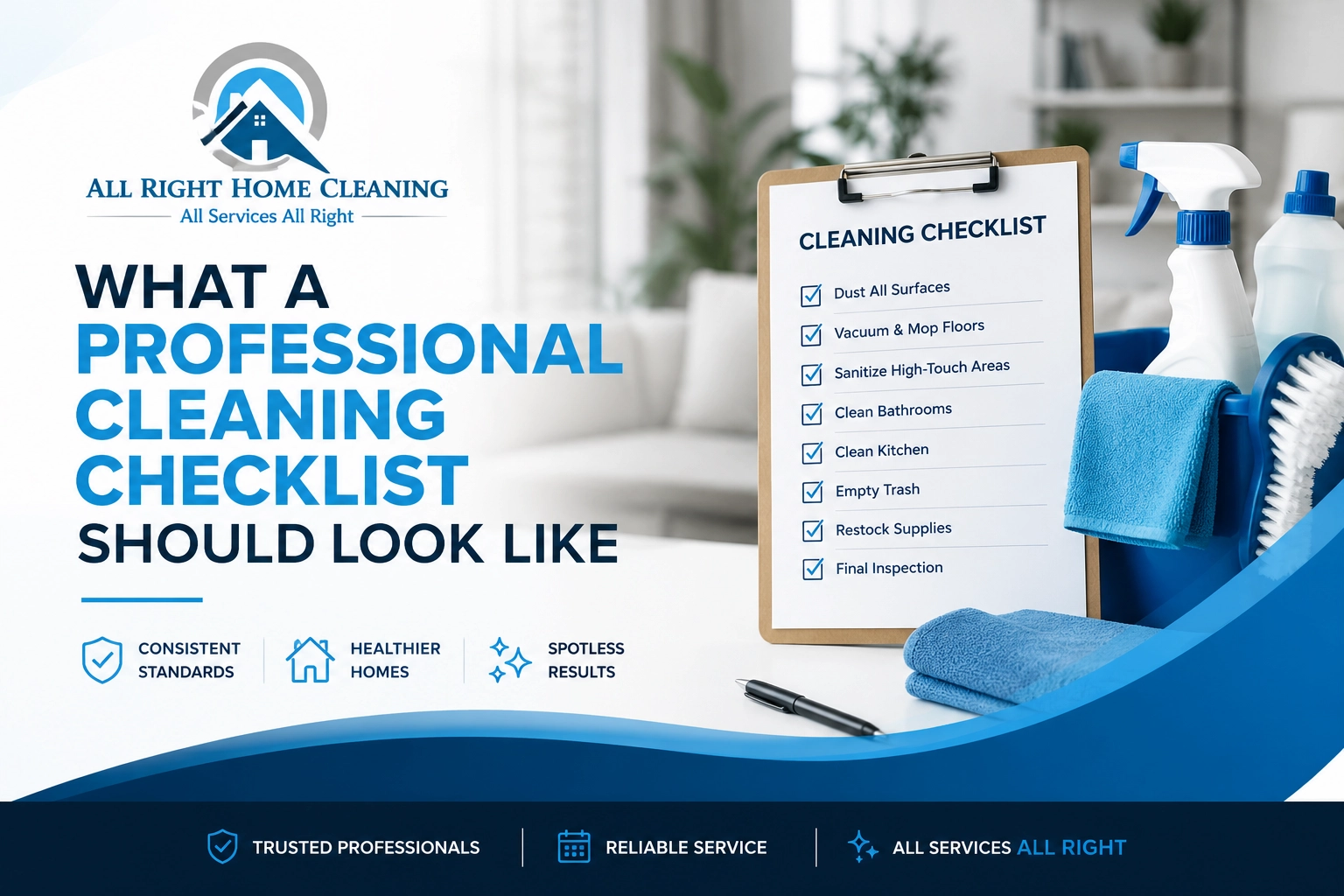
A professional cleaning checklist is not a to-do list. It is a documented, room-by-room operating standard that guarantees the same outcome at every visit, even when you are 200 miles away from the property.
The Short Answer Before You Scroll
A professional cleaning checklist is a written, room-by-room standard that defines exactly what gets cleaned, inspected, reset, and verified inside your home every single visit, without exception. It exists for one reason: to remove variability. When your home sits empty for weeks at a time on Cape Cod and a crew enters without you watching, the checklist is the only thing standing between a predictable result and a guess.
A real checklist documents three layers operating together. The first is the operational layer the specific tasks performed in each room (surfaces wiped, linen reset, floors treated, trash removed). The second is the inspection layer what gets checked after the work is done (sealed windows, working appliances, unusual odors, signs of moisture or pests). The third is the communication layer how you, the owner, are notified that the visit happened, what was found, and what condition the home is in right now.
A professional cleaning services company in cape cod built around remote owners will hand you this document before you book. If a provider cannot show you the checklist they actually use in the field not a marketing brochure, but the working document the crew follows that is the answer you needed. The checklist is the product. Everything else is decoration.
Read on. The rest of this article shows you exactly what each layer should contain, what gets missed by most companies, and how to evaluate one before you hand over your keys.
Why a Written Checklist Exists in the First Place
A checklist exists because memory fails and judgment varies between people. Two cleaners walking into the same home without a written standard will produce two different outcomes. One will skip the baseboards. The other will forget to check the refrigerator after a two-week vacancy. Neither is malicious. Both are human.
For a Cleaning Services Company in Cape Cod, MA serving seasonal homeowners, that variability is the entire business problem. The owner is not at the property to catch what was missed. There is no in-person handover, no final walkthrough together, no chance to say please also check the guest bathroom. The checklist is what replaces your presence.
There is a second reason, less talked about: liability. A documented standard protects both the homeowner and the cleaning company. If something is damaged, missing, or out of place, the checklist becomes the record of what was done, when, and by whom. It is operational evidence. Companies that resist documenting their process usually resist it because documentation creates accountability.
What Separates a Real Checklist From a Generic One
Most cleaning company websites display something they call a checklist. Read closely and you will notice the same pattern: vague verbs, no measurable outcomes, no inspection step, no notification. Dust surfaces. Vacuum floors. Clean kitchen. That is not a checklist. That is a sales page pretending to be one.
A real checklist is operational, room-specific, and verifiable. Each task must answer three questions in one line: what is being done, where, and how the result is confirmed. Compare the two patterns below.
| Element | Generic Checklist | Professional Checklist |
| Task description | “Clean bathroom” | “Disinfect toilet bowl, tank, base, and surrounding floor with EPA-registered solution; confirm no residue on tile grout” |
| Verification | None | “Photo of completed bathroom uploaded to client report” |
| Inspection layer | Absent | “Check shower drain for slow flow; check exhaust fan for dust accumulation; check ceiling for moisture spots” |
| Owner notification | None or generic SMS | “Visit complete. Findings: [photo log]. Anomalies: none / specify” |
| Frequency standard | Variable per cleaner | Identical across every visit and every crew member |
| Documentation | Marketing PDF | Field document signed off room by room |
The generic version assumes the cleaner knows what good looks like. The professional version assumes nothing and verifies everything. When you are evaluating providers, ask for the second column. If you receive the first, you have learned something important about how your home will actually be treated.
The Five Layers Every Professional Checklist Must Contain
A complete professional checklist is built in layers. Each layer answers a different question. Together they form the operational standard your home gets cleaned against every time.
- The Preparation Layer what the crew confirms before any cleaning starts. Access protocol verified, alarm code confirmed, pet status checked, special instructions reviewed, supplies and equipment counted in.
- The Room-by-Room Operational Layer the actual cleaning tasks, sequenced per room, with surface-by-surface specificity. No “kitchen” entry. Every cabinet face, every appliance interior or exterior, every backsplash zone is listed.
- The Inspection Layer the verification pass done after cleaning. Sealed windows, locked doors, functioning HVAC, moisture indicators, pest evidence, unusual odors, anything that suggests a problem developing in your absence.
- The Reset Layer restoring the home to a defined “ready” state. Linen reset, towels folded to standard, thermostat set to the agreed temperature, lights off in defined rooms, blinds positioned per owner preference.
- The Communication Layer the record sent to you. Photo log, anomaly report, time of arrival, time of departure, name of crew lead, next scheduled visit. This is the layer that converts a cleaning into a service.
Each of these layers is necessary. A provider with strong execution on layers 1 through 4 but no communication layer is still leaving you in the dark. A provider with great communication but no inspection layer is sending you photos of problems you cannot see. The five layers operate together or the system breaks.
Room by Room: What Actually Gets Done Inside Your Home
The room-by-room layer is where most checklists collapse into vagueness. A professional document treats each room as a separate operational unit with its own task list, its own inspection points, and its own definition of “complete.” Below is what each space should contain when you are not there to supervise.
Kitchen
The kitchen is the highest-risk room in a vacant Cape Cod home. Humidity off the coast accelerates mold near sinks and behind appliances. Pantries attract pests when food traces are left behind. A real checklist treats the kitchen as a verification zone, not a wipe-down zone.
- Countertops, backsplash, and surrounding wall surfaces sanitized with food-safe solution.
- Cabinet faces and handles wiped, with inspection of hinges for moisture damage.
- Sink, faucet, drain, and disposal area cleaned and treated; drain checked for slow flow.
- Refrigerator exterior wiped; interior checked for forgotten items if requested by the owner.
- Range, cooktop, hood filter, and microwave interior degreased.
- Floor cleaned and inspected for water damage near the dishwasher and refrigerator base.
- Pantry inspected for any sign of pest activity, expired items, or moisture.
- Trash removed, bin sanitized, liner replaced.
The inspection step that separates a professional cleaning services company in cape cod from a generic crew is the moisture and pest scan. A vacant kitchen in July is a different problem than a vacant kitchen in February. A real checklist accounts for the season.
Bathrooms
Bathrooms in seasonal homes are where small problems become expensive ones. A dripping shower head left running during a week of vacancy is one issue. A slow drain hiding a buildup that becomes a clog before your next visit is another.
- Toilet bowl, tank exterior, base, and surrounding floor disinfected.
- Sink, vanity surface, faucet, and drain cleaned and inspected.
- Shower and tub surfaces scrubbed; grout inspected for mildew; drain checked.
- Mirrors, glass, and chrome polished without streaks.
- Exhaust fan checked for dust accumulation that signals reduced airflow.
- Towels removed, replaced, or reset per owner preference.
- Floor cleaned with attention to tile grout and corners behind the toilet.
- Ceiling inspected for moisture spots that indicate a leak above.
Bedrooms
Bedrooms in a vacation home need to feel ready, not just clean. The standard is whether the owner could walk in tonight and sleep without rearranging anything.
- Linens stripped, laundered, and remade to a defined fold and tuck standard, or fresh sets installed.
- Mattress inspected for stains, odor, or pest evidence.
- Nightstands, dressers, and surface decor dusted and reset to baseline positions.
- Mirrors, picture frames, and lamp shades dusted.
- Closet interior inspected for moisture or musty odor.
- Windows, sills, and tracks cleaned.
- Floors vacuumed or mopped to match flooring type.
- Lights, alarm clocks, and thermostat checked for function.
Living Areas
Living rooms and family rooms collect dust faster than they look like they should, especially in coastal homes where sea air carries fine particulate constantly. The checklist must distinguish between visible cleaning and structural cleaning.
- All horizontal surfaces dusted including baseboards, window sills, and high ledges.
- Upholstery vacuumed; cushions reset to defined arrangement.
- Throw pillows and blankets reset to baseline.
- Electronics dusted carefully; remote controls sanitized.
- Built-in shelving dusted with attention to gaps between items.
- Floors treated per material vacuum, mop, or specific hardwood care.
- Windows and glass surfaces cleaned interior side.
- Fireplace area inspected for soot or animal entry signs if applicable.
Entryways, Hallways, and Transitions
These zones are often skipped entirely on generic checklists, yet they are the first thing you see when you walk into your own home after months away.
- Front door interior, frame, and threshold cleaned.
- Coat closet inspected and dusted.
- Stair treads and handrails wiped.
- Light fixtures and overhead vents dusted.
- Floor cleaned with attention to grit tracked in from outside.
- Mudroom and side entries treated to the same standard as the main entry.
Each room above is one entry in the operational layer. The full document for a typical Cape Cod home runs forty to eighty individual line items before inspection and reset are added. That density is the point. A short checklist is a checklist that misses things.
Vacation Home Checklist vs Residential Checklist: Why the Difference Matters
A Residential Cleaning Services in Cape Cod, MA checklist designed for a full-time resident is built around recurring presence. Someone lives there. Someone notices a problem within hours. The cleaning visit handles maintenance between active occupancy.
A vacation home checklist is built around the opposite reality. The home is empty most of the time. Problems compound silently. The cleaning visit is also the inspection visit, the verification visit, and often the only set of eyes inside the property between owner stays or guest turnovers. The two checklists share vocabulary but operate on entirely different logic.
| Dimension | Resident Home Checklist | Vacation Home Checklist |
| Primary purpose | Maintain a lived-in standard | Restore and verify an empty property |
| Frequency model | Weekly or biweekly | Pre-arrival, post-departure, and interval visits during vacancy |
| Inspection depth | Surface-level | Deep moisture, pests, leaks, HVAC, security |
| Linen handling | Refresh on schedule | Full reset before owner or guest arrival |
| Communication | Light, often verbal | Formal report with photos after every visit |
| Anomaly protocol | Verbal mention | Documented, escalated, owner notified within agreed window |
| Seasonal adjustment | Minor | Significant winter shutdown, summer high-use, shoulder season checks |
| Key access | Often owner-present | Documented secure access protocol every visit |
The mistake most owners make is hiring a crew built for the first column and expecting outcomes from the second. The checklist tells you which one you are getting. Read it before you sign anything.
What Happens When the Checklist Is Missing or Weak
Without a checklist, every visit becomes a judgment call. Different cleaner on Tuesday than the one who came last month. New trainee on the crew. Rushed schedule because the previous job ran long. None of these are unusual in field operations. All of them produce inconsistent results when there is no written standard absorbing the variability.
The visible consequences are familiar to anyone who has hired and fired cleaners in Cape Cod. The kitchen looks great but the guest bathroom was barely touched. Linens were changed in the master bedroom but not in the second guest room. A small water stain in the laundry room was wiped but not reported, and three weeks later it has become a repair. None of these are dramatic failures. They are quiet ones, and they accumulate.
The invisible consequences are worse. A missed moisture check in October becomes a mold remediation bill in March. An unreported pest sighting becomes an infestation by the next visit. A faucet left dripping becomes a thousand-dollar water bill. These are not theoretical. They are the standard failure modes of empty homes on the coast, and they are exactly what a real checklist is designed to catch.
If you want to see what happens during cleaning at the operational level the actual room-by-room sequence, inspection points, and reporting standard a professional crew follows that document is the single most predictive artifact of how your home will be treated. Everything else a company says about themselves is downstream of whether the checklist exists and whether the crew actually uses it.
The Inspection Layer: What Gets Checked, Not Just Cleaned
Cleaning is the visible work. Inspection is the invisible work that determines whether your home stays in the condition you left it in. A professional checklist treats inspection as a separate operational pass, not an afterthought folded into the cleaning tasks.
The inspection layer asks a different question than the cleaning layer. The cleaning layer asks is this surface clean. The inspection layer asks is this home still healthy. Those are not the same question, and crews trained only on the first one will walk past warning signs that should have triggered a phone call.
A real inspection pass covers six categories inside the home.
- Moisture and water integrity under sinks, around appliances, behind toilets, near exterior walls, ceiling spots, basement perimeter, window frames. Coastal humidity in Cape Cod creates moisture problems that begin slowly and escalate quickly.
- Pest evidence droppings, nests, entry points, chewed materials, food disturbance in the pantry. Vacant homes are pest opportunities. Catching early signs costs nothing. Missing them costs thousands.
- HVAC and mechanical thermostat function, vent airflow, filter condition, unusual sounds, water heater base for leaks. A failing HVAC system during a winter vacancy can freeze pipes within hours.
- Security and access integrity windows latched, doors locked, alarm armed before exit, smoke and carbon monoxide detectors blinking as expected, no signs of attempted entry.
- Odor and air quality musty smells suggesting mold, sewage smells suggesting dry traps, gas smells suggesting a leak, anything that the nose catches before the eye does.
- Visible damage or change anything different from the previous visit. A new crack, a stained ceiling tile, a shifted piece of furniture, a wet rug. The point of comparing visits is to catch deltas before they become problems.
Each category produces one of three outcomes on the visit report: clear, note (something to monitor), or escalate (something the owner needs to know within hours). That three-tier system is the inspection language. Without it, an inspection is just looking.
The Reset Layer: Why “Ready” Is a Defined State, Not a Vibe
The reset layer is the operational definition of your home is ready. It is what allows you to walk in tonight and find the house in the exact configuration you expect, every time, without having to ask. Reset is what separates a cleaning from a turnover.
A reset standard covers configuration, not just cleanliness. The thermostat is set to an agreed temperature. The blinds are positioned the same way every visit. The bed is made to a defined fold and tuck. The towels are stacked, hung, or rolled to a specific arrangement. The coffee setup is restored. The throw pillows are placed in the exact order documented in the home profile.
For homes used as short-term rentals, the reset is also the guest-ready state. Welcome materials in place, supplies stocked to inventory, linens fresh and folded to brand standard, no trace of the previous guest, photo log confirming the configuration that matches the listing. A turnover cleaner working without a reset standard is producing a clean home but not a rentable one.
The owner profile document is what feeds the reset standard. Every home has its own. Thermostat preferences, light protocols, blind positions, linen rotation, what gets restocked, what gets ignored, what gets photographed before the crew leaves. Companies that ask for that document during onboarding are companies that take reset seriously. Companies that skip it are improvising every visit.
The Communication Layer: How You Know What Happened
A visit you cannot verify is a visit that did not happen, from a decision-making standpoint. The communication layer is what turns the work into evidence. Without it, you are paying for a service and trusting that it occurred. With it, you have a record.
A proper post-visit report contains seven elements at minimum.
- Arrival and departure timestamps, captured at the property, not from a dispatch system.
- Name of the crew lead assigned to the visit.
- Photo log of completed rooms typically eight to fifteen images covering kitchen, bathrooms, bedrooms, and any flagged area.
- Inspection results in the three-tier format: clear, note, or escalate.
- Anomalies and findings documented in plain language with photo evidence where applicable.
- Supplies status if the home uses consumables managed by the cleaning company.
- Confirmation of reset state thermostat setting, doors locked, alarm armed, next visit on calendar.
The report is sent within an agreed window after the visit, typically the same day. For most owners managing a Cape Cod home from Boston or New York, the report arriving in the inbox by evening is the moment the day ends. The home is verified. Nothing is on fire. The owner can sleep.
What to Ask a Company Before You Hand Over Your Keys
You are not buying cleaning. You are buying a documented process executed by people you trust to be inside your home without you. The questions below separate companies that have built a system from companies that have built a marketing site.
| Question | What a Strong Answer Looks Like | What a Weak Answer Sounds Like |
| Can I see the actual checklist your crew uses? | Yes, here is the field document for vacation home visits, room by room. | We follow industry best practices. |
| How do you handle access to my home? | Documented key protocol, code rotation if requested, named individuals with access, log of every entry. | We are very careful with keys. |
| Who cleans my home each visit? | Assigned crew lead, named, with backup protocol if unavailable, all background-checked and insured. | Whoever is available that day. |
| What do I receive after each visit? | Photo log, timestamps, inspection report, anomaly notes same format every time. | A text message when we are done. |
| What happens if something is broken or missing? | Documented escalation protocol, owner notified within defined window, photo evidence, insurance coverage. | We will let you know. |
| How do you handle seasonal vacancy? | Differentiated checklist for winter shutdown, summer high-use, and shoulder-season interval visits. | Same service year-round. |
| Are you licensed, insured, and bonded specifically for residential property access? | Specific policy details available, certificate provided on request. | We are fully insured. |
The pattern is consistent. Companies built around documentation give specific answers with artifacts to back them up. Companies built around vibes give reassuring sentences. You are looking for the first column. Anything in the second column is a signal to keep looking.
A professional cleaning services company in cape cod that serves seasonal homeowners will welcome these questions because answering them is part of the sale. The questions filter out the wrong clients for them too anyone shopping on price alone will move on. That alignment is the point.
Recurring Visits: How the Checklist Adapts Across Time
A checklist is not a static document used once. It is an operating standard applied across recurring visits, with calibrated adjustments per season, per use pattern, and per home profile. The shape of the year drives the shape of the checklist.
| Period | Visit Type | Checklist Emphasis |
| Late spring | Pre-arrival deep | Full deep clean, HVAC verification, pest check, supply restock, outdoor connection prep |
| Summer high season | Weekly maintenance or turnover | Linen reset, surface refresh, sand and grit floor protocol, AC and humidity check |
| Late summer to early fall | Transition visit | Storm prep verification, exterior access points, drainage inspection |
| Fall to winter | Pre-vacancy close-down | Water shutoff verification, freeze prevention, thermostat low-set, pest deterrent, full inspection |
| Winter | Interval check visit | Freeze, leak, pest, security pass with light cleaning |
| Early spring | Pre-season reopen | Full deep clean, post-vacancy inspection, HVAC restart, water-on verification |
The interval check visit during winter is the line item most owners do not realize they need. A vacant Cape Cod home in February is exposed to freeze risk, ice dam risk, pest pressure, and silent leaks. A checklist designed for seasonal property never assumes the home is fine just because nobody is using it. The opposite assumption is the safer one.
Comparing What You Get: Trained Crew With Checklist vs Cheap Labor Without One
The pricing gap between a checklist-driven operation and a name-and-number cleaner is real. Understanding what the gap actually buys you is the difference between a smart hire and a regret.
| Factor | Cheap Labor Without Checklist | Professional Crew With Checklist |
| Per-visit cost | Lower | Higher |
| Outcome consistency | Variable across visits | Identical across visits |
| Inspection coverage | None | Six-category pass every visit |
| Anomaly catching | Reactive, after damage | Proactive, before damage |
| Owner visibility | Text confirmation, if any | Full report with photos |
| Access accountability | Informal | Documented, logged, insured |
| Long-term home cost | Higher (deferred problems compound) | Lower (problems caught early) |
| Insurance and liability | Often unclear | Defined coverage, certificate available |
| Replacement risk | High turnover | Stable, named crew |
| Total cost of ownership | Hidden, fluctuating | Predictable, budgetable |
Cheap labor looks cheaper on the invoice. It is rarely cheaper on the year. The cost gap closes the moment one missed moisture issue becomes a repair, one missed pest sighting becomes an extermination, or one missed security oversight becomes a claim. The checklist is what prevents those events from reaching your inbox as emergencies.
When you weigh what happens during cleaning at a real operational level the documented process, the inspection pass, the reset standard, the report against the alternative of paying less for a service nobody can verify, the math resolves itself. The checklist is what you are actually paying for. The cleaning is the deliverable. The verification is the product.
Frequently Asked Questions
- How long should a professional cleaning checklist actually be for a vacation home?A real operational checklist for a typical three-bedroom Cape Cod vacation home runs between forty and eighty individual line items before the inspection and reset layers are added. Larger homes with multiple bathrooms, finished basements, or rental turnover requirements often exceed one hundred items. Length is not the goal. Coverage is. A short checklist is a checklist that misses things, and missed items become the problems that surface weeks later in your absence.
- Is a cleaning checklist the same as a Standard Operating Procedure?No. A checklist is the what. A Standard Operating Procedure is the how. The checklist lists the task disinfect toilet bowl, tank, base, and surrounding floor. The SOP defines the solution used, the contact time, the cloth type, the sequence, and the verification method. A professional operation uses both together. The checklist guides the crew through the home. The SOP guarantees that two different crews produce the same outcome on the same task.
- Should I receive a copy of the checklist used in my home?Yes. Any Residential Cleaning Services in Cape Cod, MA built around remote homeowners should provide the working checklist as part of onboarding, customized to your home profile, your preferences, and your seasonal usage pattern. If a company treats the checklist as proprietary or refuses to share it, you are looking at a sales document instead of an operational one. The crew document is the artifact that matters.
- How is a vacation rental turnover checklist different from a regular cleaning checklist?A turnover checklist is built around guest readiness, not just cleanliness. It includes inventory verification, supply restocking to a defined standard, linen reset to brand or platform requirements, photo documentation of the configured state, damage assessment from the previous guest, and a confirmation log that the listing matches reality. A regular cleaning checklist focuses on surfaces. A turnover checklist focuses on whether the next guest can walk in and have the experience you sold them.
- What happens if the crew finds something wrong during a visit?The escalation protocol activates. In a documented operation, anomalies are classified by urgency. A note-level finding a small stain, a low supply, a minor wear item goes into the visit report for your awareness. An escalate-level finding water damage, pest evidence, a security concern, a broken fixture triggers a same-day phone call or message with photo evidence. The classification system is what prevents you from receiving either a flood of trivial alerts or a delayed report on something serious.
- How often should a seasonal home be checked when nobody is using it?Coastal Cape Cod homes left vacant should receive an interval check visit every two to four weeks, depending on season and exposure. Winter intervals are non-negotiable because freeze risk, leak risk, and ice damage can develop within days. Summer vacancy between rentals or family stays is lower risk operationally but higher risk in terms of pest pressure and humidity. The checklist for an interval check is shorter than a full cleaning checklist but heavier on inspection.
- Can a cleaning checklist actually prevent damage to my home?Yes, indirectly. The checklist itself does not prevent damage. The inspection layer embedded inside the checklist does. A documented six-category inspection pass moisture, pests, mechanical, security, odor, visible change performed during every visit is the early warning system for an empty home. Most expensive home repairs in vacant coastal properties begin as small, catchable signs. The checklist is what guarantees those signs get caught instead of missed.
- What should I do if my current cleaner does not use a written checklist?Ask for one and see what happens. If a written standard appears the next day, you have a cleaner who can adapt. If the answer is we just know what to do, you have a cleaner whose results will vary visit to visit because the standard exists only in someone’s head. For a full-time residence with you present, that can work. For a seasonal home in Cape Cod with you in Boston or New York, it will not.
- Are checklists used for both deep cleaning and recurring cleaning visits?Both, but they are different documents. A deep cleaning checklist covers the surfaces and zones that a recurring visit does not interior cabinet faces, baseboards, light fixture interiors, behind appliances, inside refrigerators and ovens, vent covers, wall scuffs, ceiling corners. A recurring checklist focuses on maintaining the standard the deep clean established. The two checklists work as a system across the year, not as alternatives.
- How does a checklist handle homes with pets, even if the owner is not present?The checklist includes a documented pet protocol activated even when the animal is not in the home. Pet hair zones receive additional vacuum passes. Litter areas or feeding zones receive sanitization. Air quality receives extra attention because pet dander compounds in a closed home. If a pet sitter is involved during your absence, the checklist coordinates with their schedule so that the home is reset to the agreed standard after their last visit.
- What is the role of photos in a professional checklist system?Photos serve three functions. The first is verification proof that each room was completed to standard. The second is documentation a visual record of the home’s condition at the time of the visit, which becomes important if anything is questioned later. The third is communication giving you, the remote owner, a way to see your home and confirm everything looks right without having to ask. Eight to fifteen photos per visit is the typical professional standard.
- Does a checklist change between summer and winter visits?Substantially. Summer visits emphasize high-use turnover, sand and grit floor protocols, humidity and AC monitoring, and exterior connection points. Winter visits emphasize freeze prevention, pipe and water heater inspection, pest deterrent activity, and security after storms. Shoulder season visits sit between the two with a transition focus. A checklist that does not adjust seasonally is a checklist treating the home as if the calendar does not exist.
- How do I know if the crew actually followed the checklist instead of skipping items?Three signals together. First, the post-visit report references the checklist line items, not generic descriptions. Second, the photo log covers the rooms and zones the checklist specifies, with consistent framing across visits. Third, the inspection findings include both clear items and notes a report that always says everything fine with no observations is a report nobody actually wrote. Real inspections produce real observations, even when nothing is wrong.
- What is the relationship between the checklist and the price I pay?The checklist defines what you are paying for at an item level. Two companies quoting different prices for house cleaning may be quoting two entirely different scopes once you read their checklists side by side. The cheaper quote often omits the inspection layer, the reset layer, the communication layer, or all three. Comparing companies by price alone, without comparing checklists, is comparing invoices that describe different services.
- How quickly should I expect a checklist to be customized to my home?Onboarding for a seasonal Cape Cod home typically takes one to two visits before the checklist stabilizes to your specific property and preferences. The first visit is the baseline walk-through. The second visit applies the initial checklist and identifies anything missing or overcalibrated. By the third visit, the document is settled and the standard is locked in. Companies that try to apply a generic template without that calibration period are companies producing generic results.
Final Thought
The checklist is the single most predictive artifact of how your home will be treated when you are not there. Everything a cleaning company says about reliability, professionalism, or experience traces back to whether a documented standard exists and whether the crew actually follows it. Read the checklist before you read the testimonials. Read the inspection protocol before you read the about page. Read the communication standard before you trust anyone with your keys.
A Cleaning Services Company in Cape Cod, MA built for seasonal homeowners treats the checklist as the product, not the marketing. The cleaning is the deliverable. The verification is what you are buying. And the report that arrives in your inbox after every visit is what lets you sleep two hundred miles away knowing the home is exactly as you left it, ready when you arrive.
Same standard, every visit. No surprises.