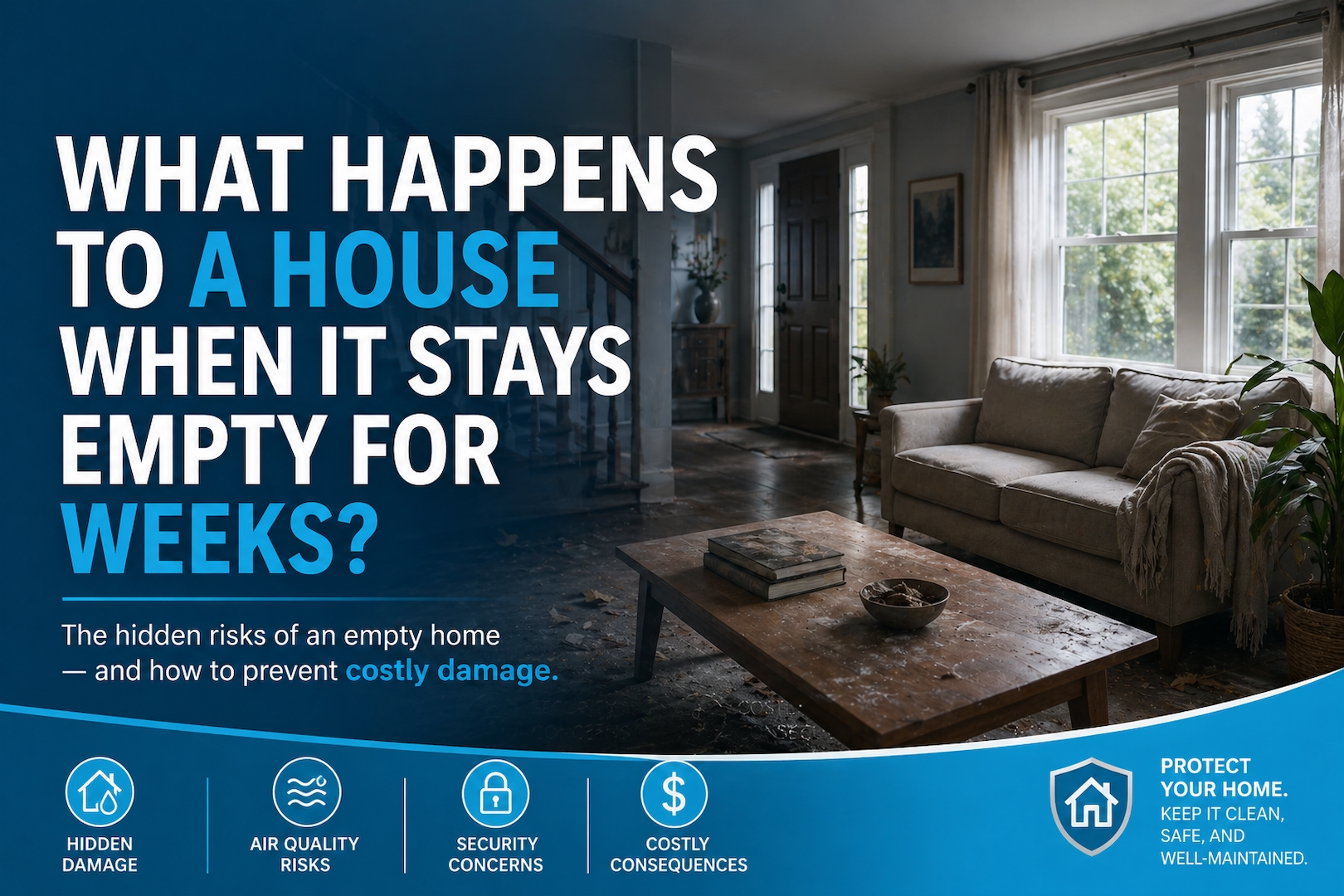
If a home in Cape Cod sits empty for weeks, it does not stay “frozen in time.” It slowly deteriorates. Dust accumulates, moisture builds, odors develop, pests move in, and critical systems like plumbing and HVAC begin to degrade. This is exactly why homeowners increasingly rely on a cleaning services company in cape cod, MA to maintain property health even when no one is there.
Why Does an Empty House Start Deteriorating So Quickly?
When a property is unoccupied, natural environmental processes continue without interruption. The absence of human activity accelerates decline rather than preserving the space.
What changes immediately after a home becomes vacant?
- Air circulation stops, causing stagnant indoor air quality
- Dust particles accumulate on surfaces, floors, and HVAC vents
- Humidity levels fluctuate, especially in coastal regions like Cape Cod, MA
- Microbial growth begins, including mold spores and bacteria colonies
- Odor compounds develop, often described as “musty” or “closed house smell”
These processes happen silently. Within the first week, the house already begins shifting from a controlled environment to a reactive ecosystem influenced by external conditions.
What Happens to Air Quality and Smell in an Empty House?
Air quality is one of the first elements to degrade.
Why does a house smell bad after being empty?
The odor is caused by a combination of:
- Volatile Organic Compounds (VOCs) released from furniture and materials
- Moisture buildup, especially near windows and bathrooms
- Dust mites and organic debris decomposition
- Lack of ventilation, trapping stale air pockets
Practical Example
A homeowner leaves their Cape Cod vacation home closed for three weeks in summer. Upon return, they notice:
- A heavy, humid smell
- Sticky surfaces due to salt air
- Slight mildew around window frames
This is not neglect. It is environmental inevitability.
How Does Moisture Impact an Unoccupied Home?
Moisture is the biggest silent threat, especially in coastal climates like Cape Cod.
Where does moisture come from if no one is inside?
- Outdoor humidity infiltrating through micro gaps
- Condensation from temperature differences
- Residual water in plumbing systems
- Poor insulation in older homes
Moisture Damage Breakdown
| Area of Home | Impact of Moisture | Risk Level |
| Bathrooms | Mold growth, grout deterioration | High |
| Basement | Structural dampness, mildew odor | Very High |
| Windows & Frames | Condensation, wood swelling | Medium |
| Kitchen Cabinets | Warping, bacterial growth | Medium |
Moisture does not need human presence to spread. In fact, it thrives in silence.
Can Pests Invade an Empty House?
Yes, and more often than most homeowners expect.
Why do pests target vacant properties?
- No human disturbance
- Easy access points remain unchecked
- Food residues go unnoticed
- Ideal nesting conditions
Common Pests in Cape Cod Vacant Homes
- Rodents seeking shelter
- Ant colonies expanding indoors
- Spiders and insects multiplying in corners
- Occasional termite activity in wooden structures
Warning Signs
- Droppings in cabinets
- Web buildup in ceilings
- Scratching noises in walls
- Unusual odors
Without intervention, a minor pest presence can escalate into a full infestation.
What Happens to Surfaces, Furniture, and Materials?
Even without use, materials degrade.
How do interiors age without occupants?
- Wood absorbs moisture, leading to expansion
- Fabric traps dust and allergens
- Leather dries and cracks
- Appliances accumulate internal residue
Advantages vs Disadvantages of Leaving a House Empty
| Aspect | Advantage | Disadvantage |
| No daily wear | Less physical usage damage | Environmental degradation increases |
| Lower utility usage | Reduced electricity consumption | Systems may deteriorate without use |
| Quiet environment | Stability | Attracts pests and humidity buildup |
The absence of activity does not preserve the home. It shifts the type of damage.
Do Plumbing and HVAC Systems Get Affected?
Yes, and often in ways that are expensive to fix.
What happens to plumbing when unused?
- Water stagnation leads to bacterial growth
- Traps dry out, allowing sewer gases inside
- Mineral deposits accumulate in pipes
HVAC System Risks
- Dust buildup in ducts
- Mold growth in vents
- Reduced efficiency upon restart
Example Scenario
A homeowner returns after one month:
- Turns on AC
- Smells mold from vents
- Notices weak airflow
This often leads to professional cleaning needs.
How Much Does It Cost to Restore an Empty House?
Costs vary depending on how long the property stayed vacant.
Estimated Costs in Cape Cod Area
| Service Type | Estimated Cost Range |
| Basic Cleaning | $150 – $300 |
| Deep Cleaning | $300 – $800 |
| Mold Remediation | $500 – $3,000+ |
| Pest Control | $200 – $1,000 |
| HVAC Cleaning | $300 – $700 |
Hiring a cleaning services company in cape cod, MA early reduces long term costs significantly.
What Is the Best Way to Prevent Damage in an Empty Home?
Preventive maintenance is not optional. It is strategic.
Essential Preventive Actions
- Schedule regular cleaning visits
- Maintain controlled ventilation
- Use dehumidifiers
- Inspect property periodically
- Secure entry points
Why Professional Help Matters
A Residential Cleaning Services in Cape Cod, MA provider does more than clean. It maintains environmental balance inside the home.
They monitor:
- Air quality
- Moisture levels
- Surface condition
- Early signs of infestation
Practical Walkthrough: Preparing a Home Before Leaving
Before leaving your property empty, follow this structured preparation:
Step by Step Preparation
- Deep clean all rooms
- Remove perishables from kitchen
- Seal trash and drains
- Adjust thermostat settings
- Close and secure windows
- Schedule maintenance cleaning
Internal Linking Opportunity
For a complete checklist, refer to preparing your home before arrival, which complements ongoing maintenance strategies.
This preparation phase determines how well your home withstands time alone.
When Should You Hire a Cleaning Service?
Timing is critical.
Ideal Scenarios
- Before leaving the property
- During extended absence
- Right before returning
- After seasonal changes
A reliable cleaning services company in cape cod, MA ensures the home remains in livable condition regardless of occupancy.
Final Thoughts: A House Never Truly “Pauses”
A house left empty continues to evolve. Air changes, materials react, systems degrade, and nature slowly reclaims control. The difference between minor upkeep and major restoration lies in proactive maintenance.
For homeowners in coastal environments like Cape Cod, this becomes even more critical due to humidity, salt air, and seasonal shifts. Engaging Residential Cleaning Services in Cape Cod, MA is not just about cleanliness. It is about preservation, protection, and long term cost efficiency.
What Are the Hidden Risks Most Homeowners Don’t Notice?
Most damage in an empty home does not come from obvious neglect. It comes from invisible processes happening over time without interruption.
According to the ICP behavior, homeowners are usually not present to detect early signals, which increases risk exposure significantly .
What silent problems develop while your home is empty?
- Dust accumulation turning into allergen hotspots
- Mold growth behind furniture and inside vents
- Salt air corrosion affecting surfaces in coastal areas
- Fabric degradation in upholstery and curtains
- Unnoticed micro leaks becoming structural issues
These are not immediate failures. They are slow degradations that compound over weeks.
Why are these risks more severe in Cape Cod homes?
Cape Cod introduces a specific environmental variable:
- High coastal humidity
- Salt particles in the air
- Frequent temperature fluctuations
This combination accelerates:
- Oxidation of metals
- Surface residue buildup
- Moisture retention in enclosed areas
A vacant inland home and a vacant coastal home behave very differently.
Why Do Vacation Homes Deteriorate Faster Than Primary Residences?
Vacation homes are not lived in consistently. That alone changes the entire maintenance dynamic.
What makes seasonal homes more vulnerable?
- Irregular cleaning cycles
- Extended vacancy periods
- Multiple occupancy patterns like guests or rentals
- Delayed issue detection
This aligns directly with the behavioral pattern of seasonal homeowners who rely on remote management .
The Real Problem Is Not Dirt — It Is Lack of Control
A homeowner living full time in a property:
- Notices smells immediately
- Cleans small messes daily
- Adjusts ventilation instinctively
A homeowner managing remotely:
- Depends entirely on third party intervention
- Cannot validate cleaning quality in real time
- Faces delayed feedback loops
This is why Residential Cleaning Services in Cape Cod, MA are not just operational, they are strategic.
Cluster Suggestion: Remote Property Management vs Cleaning Services
What Is the Difference Between Cleaning and Actually Maintaining a Home?
This is where most homeowners misunderstand the problem.
Cleaning is a task. Maintenance is a system.
What does standard cleaning actually cover?
- Surface wiping
- Floor cleaning
- Trash removal
- Basic sanitation
This is necessary, but insufficient for empty homes.
What does real home maintenance include?
- Inspection of all rooms
- Moisture and odor control
- Ventilation management
- Linen reset and surface stabilization
- Security check of entry points
According to the operational entities defined in the cleaning process, professional services follow structured checklists and inspection routines, not just cleaning actions .
Comparison Table: Cleaning vs Home Preparation
| Aspect | Standard Cleaning | Home Preparation & Maintenance |
| Focus | Visible dirt | Overall home condition |
| Frequency | Occasional | Scheduled and consistent |
| Includes Inspection | No | Yes |
| Prevents Damage | Limited | High |
| Designed for Vacancy | No | Yes |
This distinction is where most companies fail to deliver value.
How Does Lack of Consistency Create Bigger Problems Over Time?
Consistency is more important than intensity.
Why is one deep cleaning not enough?
- Dust returns within days
- Moisture fluctuates continuously
- Air quality degrades progressively
- External conditions keep affecting the home
A single intervention cannot stabilize an environment that is constantly changing.
What happens without recurring maintenance?
- Small issues become expensive repairs
- Odors become embedded in materials
- Mold spreads beyond visible areas
- HVAC systems degrade faster
This reinforces a key principle: predictability beats occasional effort.
What Does a Professional Cleaning Process Look Like in Practice?
Most homeowners never see what actually happens during a professional visit. That lack of visibility increases perceived risk.
Step by Step Professional Process
- Entry protocol and security check
- Room by room inspection
- Surface cleaning and sanitization
- Floor care and dust removal
- Linen reset if applicable
- Trash removal and odor control
- Final inspection and property check
These steps are part of structured operational workflows, not improvisation .
Why process transparency matters
- Reduces uncertainty
- Builds trust remotely
- Ensures repeatable results
For this ICP, trust is not built through promises, but through visible systems and consistency .
How Does Trust Impact the Decision to Hire a Cleaning Company?
The biggest barrier is not price. It is trust.
What homeowners are really asking
- Can I give them access to my home?
- Will they follow the same standard every time?
- Will I need to check their work?
These concerns align directly with the persona’s objections around reliability and control .
Key Trust Factors
- Background checked cleaners
- Insured cleaning service
- Consistent team
- Clear communication after each visit
These are not marketing elements. They are risk mitigation mechanisms.
Trust vs Price Comparison
| Factor | Low Price Focus | Trust Focus |
| Decision Driver | Cost | Risk reduction |
| Long Term Value | Low | High |
| Stress Level | High | Low |
| Consistency | Unpredictable | Reliable |
For high income seasonal homeowners, trust always outweighs cost.
What Is the Real Value of Hiring a Cleaning Services Company in Cape Cod, MA?
It is not cleaning.
It is control.
What homeowners actually gain
- Peace of mind while away
- Predictable home condition
- Reduced long term maintenance costs
- Confidence before arrival
This directly aligns with the fundamental communication principle: you are not selling cleaning, you are selling peace of mind to someone who is not present .
Real World Scenario
A homeowner living in New York owns a summer house in Cape Cod.
Without service:
- Arrives to dust, humidity, odor
- Spends first day fixing problems
With professional service:
- Walks into a clean, prepared home
- Everything feels ready
The difference is not effort. It is systemization.
When Does an Empty House Become a Serious Problem?
Time is the multiplier.
Timeline of deterioration
| Time Empty | What Starts Happening |
| 1 Week | Dust accumulation, air stagnation |
| 2–3 Weeks | Odor formation, humidity imbalance |
| 1 Month | Mold risk, pest activity |
| 2+ Months | Material degradation, system inefficiency |
The longer the vacancy, the higher the recovery cost.
Critical Insight
Most homeowners react after problems appear.
High level homeowners prevent before problems exist.
That is the difference between reactive cleaning and proactive maintenance.
Why Proactive Maintenance Always Costs Less Than Reactive Cleaning?
This is where financial logic becomes clear.
Cost Comparison
| Approach | Short Term Cost | Long Term Cost | Risk Level |
| Reactive Cleaning | Low | High | High |
| Preventive Maintenance | Moderate | Low | Low |
Why this matters
- Mold remediation is exponentially more expensive than prevention
- Pest infestation costs more than periodic inspection
- HVAC repair costs more than regular cleaning
This is not about spending more. It is about avoiding exponential cost growth.
Transition to Final Stage
At this point, one pattern becomes clear:
An empty home is not inactive.
It is unmanaged.
And unmanaged environments always move toward deterioration.
The only variable you control is how early you intervene and how consistent that intervention is.
How Do You Build a System That Keeps Your Home Ready Even When You Are Not There?
At a certain level, this stops being about cleaning and becomes operational control of your property.
For homeowners who are not physically present, the goal is simple:
Your house should feel lived in, even when it is not.
This aligns directly with how high value seasonal homeowners think. They are not looking for occasional help. They are looking for predictability and control at a distance .
What does a complete home maintenance system actually include?
A structured system is built on four pillars:
- Scheduled cleaning cycles
- Environmental control
- Routine inspection protocols
- Communication and reporting
Why is this different from hiring a basic cleaner?
A basic cleaner performs tasks.
A structured service:
- Maintains the condition of the property
- Detects early risks before they escalate
- Follows a repeatable operational checklist
- Provides visibility even when you are miles away
This reflects the idea that professional cleaning is a process driven service, not a one time action .
What Is the Ideal Cleaning Frequency for an Empty Home?
There is no universal schedule. It depends on environment, property type, and usage pattern.
Recommended Cleaning Frequency Based on Usage
| Property Type | Recommended Frequency |
| Seasonal vacation home | Every 2–3 weeks |
| Airbnb or rental property | After every stay |
| Luxury second home | Weekly or bi weekly |
| Long term vacant property | Monthly minimum |
Why frequency matters more than intensity
- Prevents buildup instead of removing accumulation
- Stabilizes humidity and air quality
- Reduces long term wear on materials
- Keeps systems functioning properly
Consistency creates environmental balance.
That is the real objective.
What Should Be Checked Regularly in a Vacant Home?
Cleaning alone is not enough. Inspection is what prevents escalation.
Critical Inspection Points
- Bathrooms for mold and moisture
- Kitchen surfaces for residue and odor
- Windows and frames for condensation
- Floors and corners for dust accumulation
- HVAC vents for airflow and contamination
- Entry points for security integrity
Why inspection is non negotiable
Most problems:
- Start small
- Are invisible at first
- Become expensive quickly
Professional services integrate inspection into every visit because cleaning without verification creates blind spots .
How Do Seasonal Changes Impact an Empty Home in Cape Cod?
Seasonality in Cape Cod is not just climate. It is a structural variable.
What happens during different seasons?
Summer
- Increased humidity
- Higher mold risk
- Salt air accumulation
Fall
- Temperature fluctuations
- Condensation buildup
Winter
- Frozen pipes risk
- Dry indoor air affecting materials
Spring
- Pollen and allergen accumulation
- Moisture transition period
Why seasonal preparation is critical
Each season introduces different stress factors.
A home left unadjusted:
- Suffers cumulative damage
- Requires heavier intervention later
- Loses material integrity faster
This is why Residential Cleaning Services in Cape Cod, MA must adapt based on time of year, not just routine.
What Are the Most Effective Prevention Strategies?
Prevention is not about doing more. It is about doing the right things consistently.
High Impact Preventive Actions
- Maintain controlled ventilation
- Use dehumidifiers strategically
- Keep surfaces clean and dry
- Schedule recurring professional visits
- Monitor odor and air quality
Why these strategies work
They target the root causes:
- Moisture
- Stagnant air
- Organic buildup
When these are controlled, most problems never develop.
Prevention vs Reaction Breakdown
| Strategy Type | Outcome |
| Preventive | Stability and low cost |
| Reactive | Damage and high cost |
The difference is timing.
What Role Does Communication Play in Remote Home Management?
Communication is the bridge between absence and control.
What homeowners expect from a service
- Confirmation after each visit
- Updates on home condition
- Notification of any irregularities
- Clear schedule and consistency
Why communication builds trust
Without visibility, uncertainty increases.
Structured communication:
- Reduces perceived risk
- Reinforces reliability
- Builds long term relationships
This reflects a core principle: control must be felt, even from a distance .
Cluster Suggestion: How Cleaning Companies Should Communicate With Clients
How Do You Choose the Right Cleaning Services Company in Cape Cod, MA?
At this stage, the decision is not about who cleans.
It is about who you trust with your home when you are not there.
Key Selection Criteria
- Proven consistency
- Clear operational process
- Strong local reputation
- Transparent communication
- Experience with vacation homes
Red Flags to Avoid
- Vague service descriptions
- No clear checklist or process
- Inconsistent reviews
- Lack of insurance or verification
What Actually Matters Most
| Criteria | Importance Level |
| Trust | Critical |
| Consistency | Critical |
| Price | Secondary |
| Speed | Moderate |
This matches how the persona evaluates decisions. Risk always outweighs cost .
Strategic Anchor
If you are evaluating options, working with a reliable cleaning services company in cape cod, MA is the difference between:
- Managing problems
- Avoiding problems entirely
That distinction defines long term property condition.
How Does This Connect to Your Arrival Experience?
Everything leads to one moment:
Walking into your home after being away.
Two possible outcomes
Without proper maintenance
- Stale air
- Visible dust
- Minor issues everywhere
- Time spent fixing instead of relaxing
With structured maintenance
- Fresh environment
- Clean, prepared spaces
- No surprises
- Immediate comfort
Why preparation matters more than cleaning
Cleaning removes problems.
Preparation prevents them from being noticed at all.
Internal Linking Opportunity
This is exactly where preparing your home before arrival becomes critical, connecting maintenance with final readiness.
Strategic Closing Insight
An empty house is never neutral.
It is either:
- Gradually deteriorating
- Or actively being maintained
There is no middle ground.
The real decision is not whether your home needs cleaning.
It is whether you want:
- Reactive fixes after problems appear
- Or predictable control before they happen
Frequently Asked Questions About Empty Homes and Maintenance
This section addresses the exact doubts homeowners search for when they are trying to understand what really happens to a house left unattended and how to prevent damage.
How long can a house sit empty before problems start?
A house does not need months to deteriorate. In most cases:
- Within 7 days, dust and air stagnation begin
- Within 2 to 3 weeks, odors and humidity imbalance appear
- Around 30 days, mold risk and pest activity increase
Environmental exposure never pauses. The only variable is whether someone is managing it.
Why does my house smell bad after being closed?
The smell comes from:
- Trapped humidity
- Lack of airflow
- Organic particle decomposition
- Material off gassing from furniture and surfaces
Closed homes create a sealed environment where odors accumulate instead of dissipating.
Can mold grow even if the house looks clean?
Yes. Mold does not depend on visible dirt.
It develops in:
- Hidden corners
- Behind furniture
- Inside HVAC systems
- Bathrooms and basements
This is why visual cleanliness does not equal environmental safety.
Do I really need cleaning if nobody is living there?
Yes, and arguably more than occupied homes.
An empty home:
- Does not regulate itself
- Does not get incidental cleaning
- Does not have airflow from daily activity
Without intervention, it becomes an uncontrolled environment.
What is the biggest risk of leaving a house empty?
The biggest risk is not one single issue.
It is compounding neglect:
- Moisture leads to mold
- Mold leads to material damage
- Damage leads to high restoration costs
Most homeowners only react when the problem becomes visible.
Is it better to clean before or after returning?
Both are important, but serve different purposes:
- Before arrival: ensures the home is ready
- After return: restores condition after use
However, ongoing maintenance between visits is what prevents problems entirely.
How do I keep my house fresh while I am away?
The most effective approach includes:
- Scheduled professional cleaning
- Controlled ventilation
- Moisture management
- Periodic inspection
This is not about one action. It is about a system.
Are cleaning services safe if I am not there?
Safety depends on the provider.
A professional cleaning services company in cape cod, MA should offer:
- Background checked staff
- Insurance coverage
- Consistent team members
- Clear communication after each visit
Trust is built through process, not promises.
How do I know if a cleaning company is reliable?
Look for:
- Consistent reviews over time
- Clear description of process
- Experience with vacation homes
- Predictable communication
Reliability is measured in repetition, not marketing.
What is the difference between regular cleaning and maintenance cleaning?
- Regular cleaning focuses on visible dirt
- Maintenance cleaning focuses on preserving the home condition
For empty homes, maintenance is the only approach that works long term.
People Also Search For
To expand semantic coverage and capture long tail intent, here are additional queries directly connected to this topic:
- Why do empty houses deteriorate faster
- How to maintain a second home remotely
- What happens if a house is not cleaned for months
- How to prevent mold in vacation homes
- How often should a vacant house be cleaned
- Best way to manage a seasonal home in Cape Cod
- Signs your house has been empty too long
- How to prepare your house before arriving after vacation
Each of these queries represents a content expansion opportunity within your cluster strategy.
Final Perspective: What Most Homeowners Realize Too Late
A house does not wait for your return.
It does not maintain itself.
And it does not stay in the same condition you left it.
What actually happens is simple:
- Air changes
- Moisture builds
- Surfaces degrade
- Systems lose efficiency
And all of this happens quietly.
The difference between walking into a problem and walking into a ready home comes down to one decision:
Was your home actively managed while you were away?
For homeowners who understand this, working with Residential Cleaning Services in Cape Cod, MA is not a luxury.
It is a control system.
FAQ – People Also Ask
- What happens if a house is left closed for a month?
Air becomes stagnant, moisture builds up, and mold risk increases. Surfaces collect dust and odors intensify. - Can mold grow in an empty house?
Yes. Mold thrives in humid, unventilated environments, especially in bathrooms and basements. - How do you keep a vacant house fresh?
Use ventilation, dehumidifiers, and schedule regular professional cleaning. - Do pipes get damaged in unused homes?
They can. Water stagnation and dry traps can lead to odors and bacterial buildup. - How often should a vacant home be cleaned?
Ideally every 2 to 4 weeks depending on climate and exposure. - Is professional cleaning necessary for empty homes?
Yes. It prevents long term damage and reduces restoration costs.